Months turned into surnames, saints became ancestors, and a village blacksmith’s job title outlived every anvil he ever swung.
Surnames are strange things once you stop and look at them properly. A lot of us walk around with surnames we’ve never questioned, passed down from grandparents who got them from their grandparents, and so on, until the trail goes cold somewhere in a dusty old register. In the Western Cape, Coloured surnames come from an odd and wonderful mix of sources: Dutch farmers, French refugees, biblical figures, and even the calendar on the wall. Once you start digging, it turns into a proper rabbit hole.
- Where do Coloured surnames come from?
- Biblical and Owner Names
- Surnames Taken from the Calendar
- Dutch and Afrikaans Settler Surnames
- Huguenot and French Surnames
- English Surnames
- Islamic and Asian Surnames
- Spanish and Filipino Surnames
- Distinctive Cape Coloured Surnames
- Patronymic Surnames
- Khoisan Influence
- The Most Popular Coloured Baby Names in the Western Cape
- The Ten Most Common Coloured Surnames in the Western Cape
Where do Coloured surnames come from?
The history of the Cape brought people from many parts of the world into the same society. Dutch settlers arrived from the 1600s, followed by French Huguenots, British settlers and enslaved people brought from places including India, Indonesia, Madagascar and parts of East Africa.
Enslaved people were frequently given European or biblical names by owners. Cape records also contain classical names, Muslim names, names linked to places of origin and calendar names.
After emancipation, names that had belonged to enslaved people continued through families. Over generations, first names, nicknames and other identifiers could become hereditary surnames.
That history helps explain why Coloured surnames can look remarkably varied within the same community.
Biblical and Owner Names
Many Coloured surnames descend from biblical figures. Names such as Adams, Daniels, Jacobs and Matthews often trace back to enslaved people who were baptised and given the names of biblical patriarchs, apostles or saints. Slave owners and missionaries frequently assigned these names during conversion, so a surname like Abrahams or David often signals a family history connected to slavery and later Christianisation at the Cape.
Surnames Taken from the Calendar
Few naming customs are as unusual as this one. Surnames like January, March, April, June, Julie and Augustus mirror the months of the year, and they trace back to the period when enslaved people were logged by the date of their sale, arrival or baptism instead of a family lineage. A child baptised in September might end up with that very name passed down for centuries. It sounds harsh set against a calendar page, yet these surnames remain among the most recognisable markers of Coloured identity in the Cape today.
Dutch and Afrikaans Settler Surnames
Names such as Van der Merwe, Van Wyk, Louw, Nel, Cloete, Fourie, Du Plessis and Van Zyl arrived with Dutch and Afrikaans settlers from the seventeenth century onward. Some Coloured families hold these surnames because of direct descent from settler households, formal adoption, or informal unions across the colour line that were common in the early Cape and seldom recorded honestly.
Huguenot and French Surnames
French Protestant refugees, known as Huguenots, settled the Cape from 1688 after fleeing religious persecution in France. Their surnames such as Du Toit, De Villiers, Le Roux, Joubert, Marais, Olivier and Basson spread across the colony’s population over the following centuries and entered Coloured families through the same routes as Dutch surnames: descent, adoption and mixed unions.
English Surnames
English surnames such as Smith, Brown, Johnson, Young, Lewis and Richardson entered Coloured naming patterns mainly during the nineteenth century, once the British took over administration of the Cape. Some families adopted these names for social or practical reasons under British rule, while others gained them through the same paths of descent seen with Dutch and French surnames.
Islamic and Asian Surnames
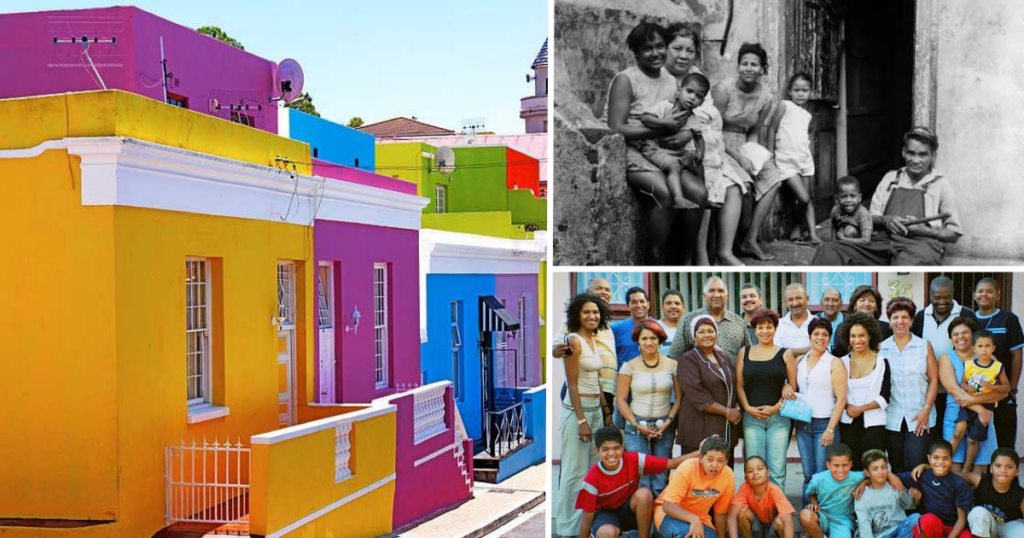
The Cape Malay community, descended largely from enslaved and exiled people brought from what is now Indonesia, Malaysia and India, contributed Muslim names that function as surnames within Coloured families, among them Achmat, Ibrahim and Osman. These names reflect the Islamic faith that took hold at the Cape from the late seventeenth century and still runs deep through District Six, Bo-Kaap and surrounding communities.
Spanish and Filipino Surnames
A smaller cluster of surnames such as Gomez, Pascal, De la Cruz, Fernandez, Manuel and Garcia trace back to early Filipino and Spanish-influenced settlers who reached the Cape through Portuguese and Spanish trade routes centuries ago. These names remain rarer but persist in specific Coloured families along the coast.
Distinctive Cape Coloured Surnames
Then we get to some of the surnames that many Capetonians instantly recognise as strongly associated with Coloured communities.
Cupido, Fortuin, Adonis, Gelant, Jantjies, Capito, Do Reyes and January are examples.
Several have fascinating origins. Cupido comes from Cupid, the Roman god of desire. Adonis comes from classical mythology. Fortuin comes from the Dutch and Afrikaans word associated with fortune or luck.
Historical Cape records show classical names such as Cupido and Adonis alongside Biblical and calendar names given to enslaved people.
Jantjies is associated with a patronymic naming tradition. Gelant is among the surnames identified in academic research as strongly associated with Cape Coloured naming patterns.
These names can offer fascinating clues for genealogical research, although a surname alone cannot establish someone’s ancestry.
Patronymic Surnames
Surnames such as Isaacs, Fredericks, Roberts, Beukes and Primus grew out of an ancestor’s first name instead of a title, trade or place. This patronymic pattern, where a surname simply extends a father’s or grandfather’s first name by a generation, rests alongside biblical naming as one of the oldest sources of Coloured surnames.
Khoisan Influence
In regions such as Namaqualand, surnames with Khoisan origins entered Coloured family lines, particularly from the early twentieth century onward. Over time, European surnames largely replaced these names in official records, though pockets of Khoisan naming heritage remain in specific families and regions to this day.

The Ten Most Common Coloured Surnames in the Western Cape
According to Forebears, a genealogy portal cataloguing surname meanings and distribution worldwide, these are the ten most frequent surnames recorded within the Western Cape’s coloured communities.
| Rank | Surname | Origin / Meaning |
| 1 | Jacobs | Patronymic surname from the Hebrew name Jacob, which means “supplanter” or “one who follows”; widespread among Coloured families with biblical naming roots. |
| 2 | Williams | English patronymic surname which means “son of William”, itself from Germanic elements that mean “will” and “helmet”; adopted widely during and after slavery. |
| 3 | Adams | Patronymic surname from the Hebrew name Adam, which means “man” or “earth”; one of the most common biblical surnames across Coloured communities. |
| 4 | Abrahams | Patronymic surname from the Hebrew name Abraham, which means “father of many”; linked closely to slave-era baptismal naming practices. |
| 5 | Davids | Patronymic surname from the Hebrew name David, which means “beloved”; a descendant-style surname formed directly from a first name. |
| 6 | Hendricks | Dutch patronymic surname which means “son of Hendrik”, the Dutch form of Henry, itself a name that means “home ruler”. |
| 7 | Petersen | Scandinavian and Dutch patronymic surname which means “son of Peter”, from the Greek name Petros, which means “rock”. |
| 8 | Daniels | Patronymic surname from the Hebrew name Daniel, which means “God is my judge”; another common biblical surname across the Cape. |
| 9 | Booysen | Afrikaans surname, a patronymic form linked to the Dutch first name Boy or Boye, carried into the Cape through Dutch and Afrikaans settlement. |
| 10 | Smith | English occupational surname denoting a metalworker, from the Old English “smitan”, to strike or forge; entered Coloured families under British administration |
Next time you fill in a form and write down your last name, remember there’s a whole backstory tucked inside those letters.

Author: Editorial Team
About The Author
