
7:45 on a Monday morning is hardly an ideal time to discover that your usual 35-minute drive has become an hour-long crawl.
The N1 is packed. The N2 is filling up. The cars ahead have formed an almost unbroken line towards town, while traffic joining from another road adds another few hundred vehicles to the queue.
A minibus taxi has decided the shoulder is a lane.
Somewhere ahead, a minor collision has reduced several lanes to one. Drivers are checking navigation apps at traffic lights, looking for an escape route that may already be filling up with everyone who had the same idea.
This is Cape Town traffic at its most familiar. Residents discuss it almost as often as the weather. Newcomers often arrive expecting scenic drives beneath Table Mountain and along the coastline. The scenery remains spectacular. The queue in front of it can be considerable.
Whether you commute daily, visit Cape Town regularly or plan a holiday in the city, understanding traffic patterns can save time, fuel and frustration.
Why Cape Town Traffic Gets So Congested
Many cities expand in every direction. Cape Town never had that luxury.
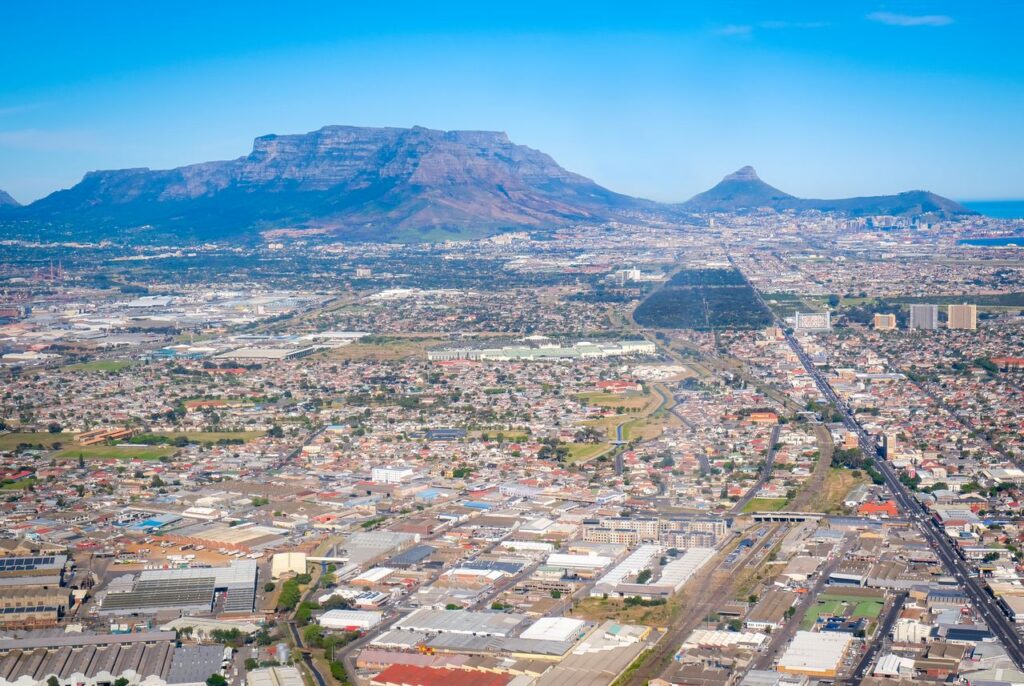
Table Mountain, the Atlantic Ocean, False Bay and surrounding mountain ranges create natural barriers around large sections of the metropolitan area. Road planners work within boundaries that cannot move.
Large numbers of commuters travel from the Northern Suburbs, Southern Suburbs, Cape Flats, Helderberg Basin and West Coast corridor towards major employment centres such as the CBD, Century City, Bellville, Claremont and Stellenbosch.
That movement creates pressure on a relatively small collection of major routes.
Add population growth, increased vehicle ownership and expanding residential developments, and congestion begins to look less like an occasional inconvenience and much like a mathematical certainty.
Cape Town Peak Traffic Times
Weekday mornings are usually busiest between around 06:30 and 09:00. Cape Town traffic generally flows towards the CBD, Century City, Bellville and other major employment centres.
The afternoon peak usually begins around 15:00, with the heaviest congestion often occurring from roughly 16:00 to 18:30. Traffic then spreads outwards towards the southern suburbs, northern suburbs, Cape Winelands and Helderberg.
Friday afternoons can be particularly difficult as commuters leave work while weekend traffic begins to build.
| Period | Typical traffic conditions | Areas to watch |
| 06:30 to 09:00 | Heavy morning congestion | N1, N2, M3, M5, R300 |
| 09:00 to 12:00 | Traffic generally eases | CBD, shopping districts and commercial areas |
| 12:00 to 15:00 | Usually lighter commuter traffic | Local congestion around schools and retail areas |
| 15:00 to 16:00 | Afternoon traffic starts building | Main suburban routes |
| 16:00 to 18:30 | Heavy afternoon congestion | N1, N2, M3, M5, R300 |
| After 18:30 | Traffic generally eases | CBD, major shopping and entertainment areas |
| After 20:00 | Usually quieter | Occasional delays around events and road incidents |
Off-peak traffic in Cape Town
The period between roughly 09:30 and 15:30 usually has lighter commuter traffic.
This period can work well for appointments, deliveries and journeys that do not require a fixed morning start. A departure at 09:30 can save substantial time compared with leaving at 07:30.
Late evening travel also tends to be easier on the major freeways. Traffic volumes still depend on events, roadworks, weather and incidents, so live traffic information remains useful.
For commuters with flexible working hours, an earlier start can be one of the simplest ways to reduce time spent on the road.
Major Cape Town roads prone to congestion
N1
The N1 is one of Cape Town’s busiest commuter corridors. Congestion regularly affects sections between the northern suburbs and the city, with pressure around Durban Road, Century City, Koeberg Interchange and the Foreshore.
Morning traffic generally builds towards Cape Town. Afternoon congestion can affect traffic heading towards Bellville, Brackenfell and the northern suburbs.
N2
The N2 carries large volumes of traffic from Somerset West, Strand, the Cape Flats and surrounding areas towards Cape Town.
City-bound traffic can become heavily congested around the Cape Flats and Settlers Way. The section approaching the CBD is another pressure point.
M3
The M3 is the main southern route into Cape Town from areas such as Constantia, Bishopscourt, Newlands and Rondebosch.
The section around Wynberg Hill and Hospital Bend can become heavily congested during commuter periods. Traffic entering the city tends to be busiest during the morning commute, with the reverse flow building during the afternoon.
M5
The M5 serves a large part of the southern suburbs and links into the N1 at Koeberg Interchange.
Heavy traffic can develop around Kromboom, Observatory, the N2 interchange and Koeberg. The M5 can also become a useful alternative when another major corridor has a serious blockage, although conditions can change quickly.
N7 and Vanguard Drive
The N7 carries traffic between Cape Town, Goodwood, Parow, Brackenfell and areas further north.
Vanguard Drive also experiences substantial commuter traffic, particularly where traffic from the Cape Flats and surrounding suburbs converges with routes towards the northern suburbs.
R300
The R300 is a key north-south route through the Cape Flats. It links several major roads and carries commuters between the northern and southern parts of the metropolitan area.
Its interchanges can become heavily congested during peak periods.
R27 Marine Drive
Marine Drive is a major route for traffic from Milnerton, Table View, Parklands, Blouberg and areas along the West Coast.
Congestion can build towards the CBD in the morning and towards the northern coastal suburbs during the afternoon. The City has identified Marine Drive among Cape Town’s major congestion corridors.
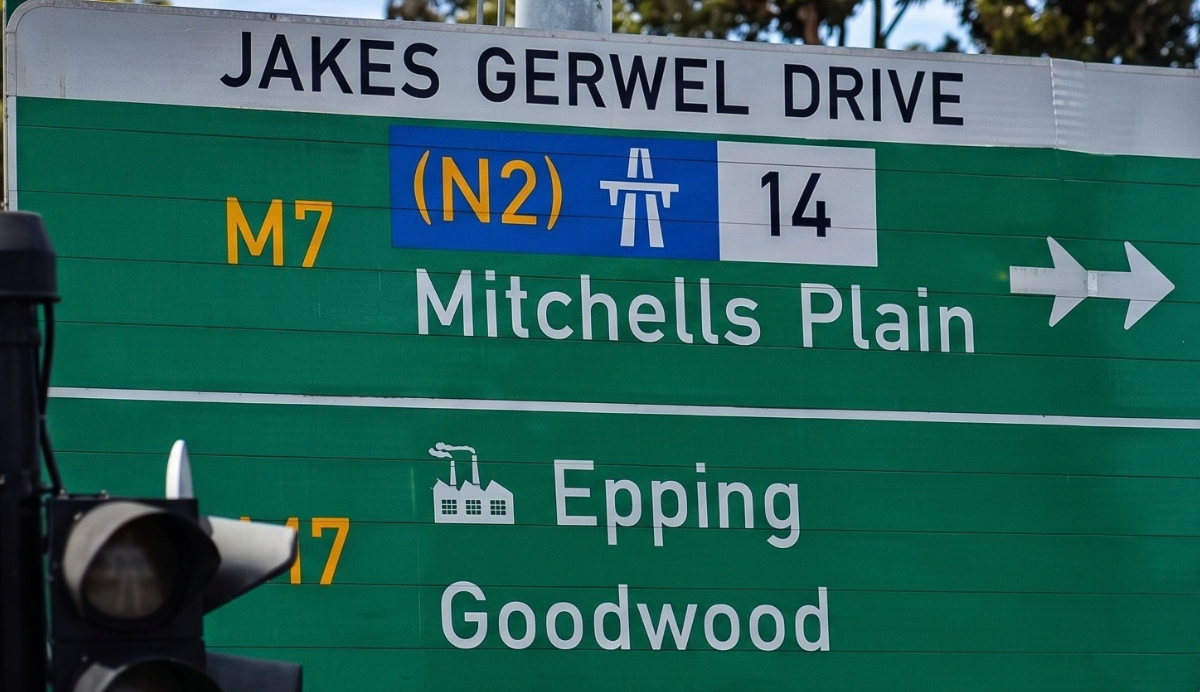
The Commuter’s Guide to Jakes Gerwel Drive
Alternative Routes Worth Considering
Alternative routes vary depending on destination, time of day and traffic conditions.
For N1 Congestion
Potential alternatives include:
- Voortrekker Road
- Frans Conradie Drive
- Plattekloof Road
- Jip de Jager Drive
For N2 Delays
Drivers sometimes use:
- Klipfontein Road
- Lansdowne Road
- Vanguard Drive
- Baden Powell Drive
For Southern Suburbs Travel
Useful alternatives may include:
- Main Road
- Imam Haron Road
- Rhodes Drive
- Edinburgh Drive
For Northern Suburbs Travel
Alternative options often include:
- Durban Road
- Old Paarl Road
- Wellington Road
- Bottelary Road
Route suitability depends on current conditions, roadworks and incidents.
Areas That Experience Regular Bottlenecks
The following locations frequently attract slow-moving traffic:
| Area | Typical Problem |
| Hospital Bend | High traffic volumes merging |
| Koeberg Interchange | Multiple route connections |
| Century City approaches | Business district traffic |
| Bellville CBD | Commercial and commuter traffic |
| Somerset West approaches | Long-distance commuter volumes |
| Cape Town CBD entrances | Peak-hour demand |
| Airport precinct | Commuter and travel traffic |
| Paarden Eiland | Industrial area congestion |
Tips for shortening the journey
- Leave earlier. Setting off at 06:15 instead of 07:15 can cut a long trip dramatically. Aim to be on the road 30 to 45 minutes before the peak begins.
- Leave later when you can. Waiting until after 09:30 or 18:30 often pays for itself in minutes.
- Check a live map before you turn the key. Google Maps and Waze show incidents as they develop, and the City of Cape Town posts regular traffic updates on social media.
- Raise a staggered start with your employer. A 30-minute shift in your day can change the whole journey.
- Share the ride. Two people in one car mean one fewer vehicle in the queue and half the fuel bill each.
- Choose your beach hour. On a hot Saturday, reach the coast before 10:00 or wait until after 16:00.
- Allow extra time for rain and wind. Both slow the entire network.
- Resist the late lane change. It gains you one car length and costs everyone behind you a minute.
- Fill the tank the evening before. A queue is a poor place to discover a warning light.
Is Cape Town Traffic Getting Worse?
Many commuters would answer that question with little hesitation.
Population growth, expanding suburbs and increasing vehicle ownership continue to place pressure on Cape Town’s road network. Major infrastructure projects provide relief in certain areas, yet demand often grows alongside improvements.
For now, local knowledge remains one of the most useful tools available. Understanding congestion hotspots, travelling outside peak periods where possible and keeping alternative routes available can make a noticeable difference to daily travel across the Mother City.
Quick answers
When is Cape Town traffic the worst? Weekday mornings from 07:15 to 08:15 and afternoons from 16:30 to 17:30, particularly during school term.
When is traffic lightest? Midday on weekdays, evenings after 19:00 and early weekend mornings.
Which routes are the most congested? The N1 and N2 inbound carry the heaviest commuter loads, with the M3 close behind in the Southern Suburbs.
About The Author
