Disclaimer: This guide is for informational purposes only. We do not condone or support the activities of criminal organisations or the violence, intimidation, drug trade and other crimes associated with them.
Cape Town has a long and complicated gang history. For many residents, the word gangsterism immediately brings to mind the Cape Flats, where rival groups have been part of community life for decades.
To understand Cape Town gangs, you have to look beyond the streets. Some of the city’s most enduring gang identities were forged inside prison, where the 26s, 27s and 28s developed a complex system of loyalty, authority and rules. Over time, that prison culture became connected to street gangs across the Cape Flats, creating relationships that have lasted for generations.
The names are familiar to many Capetonians. The Americans. The Sexy Boys. The Mongrels. The Terrible Josters. The Firm. Behind those names is a much older story involving forced removals, prison life, poverty, organised crime and communities that have lived alongside gangsterism for decades.
At the centre of that history sits the Numbers system.
The 26s, 27s and 28s are not three versions of the same gang. Each has its own traditions and place within the wider prison hierarchy. Their influence has also extended far beyond prison walls, becoming intertwined with the history of Cape Town gangs and the wider culture of the Cape Flats.
The Numbers system explained
The Numbers system is made up of three main prison gangs: the 26s, 27s and 28s.
They are separate groups with different traditional functions. Their names refer to numbers rather than conventional gang names, which reflects the unusual structure of the system.
The Numbers are also surrounded by a culture of secrecy. Much of their internal world is not visible to outsiders, and accounts of their history can vary.
At its most basic level, the traditional structure can be understood through the roles associated with each group.
The 26s
The 26s are traditionally associated with money and material wealth.
Their prison role has included activities linked to acquiring and moving goods. Gambling, theft, fraud and smuggling have historically been associated with the group.
Inside prison, the 26s have also been linked to the movement of prohibited goods and other forms of illicit trade.
This gave the group a reputation as the financial side of the Numbers system.
Money, however, is only part of the picture. The 26s exist within the wider hierarchy of the Numbers and have historically maintained relationships with the other two groups.
The 27s
The 27s occupy a different position within the system.
Their traditional role centres on law, discipline and judgement. They have been described as the group responsible for enforcing the internal rules of the Numbers and dealing with disputes.
The 27s have also traditionally served as an intermediary between the 26s and 28s.
That position gives them a role that goes beyond physical enforcement. The group is associated with maintaining the internal order of the Numbers system and ensuring that its rules are followed.
The 28s
The 28s are traditionally associated with military power and protection.
Their role developed around defending the interests of the Numbers system and enforcing its authority. The group also developed a complex internal sexual hierarchy within the prison environment.
This aspect of the 28s is often discussed in sensational terms. The history is far darker and more complicated than that. Prison sexual relationships within the Numbers system have been linked to coercion, violence, control and unequal power.
The 28s have had a particularly strong historical presence in Western Cape prisons, including Pollsmoor.
Their influence also became closely connected to street gang culture in Cape Town.
How the Numbers reached beyond prison walls
The relationship between the Numbers and Cape Town gangs was never as simple as one organisation controlling another.
Street gangs had their own identities, leaders and neighbourhood structures. Prison created another hierarchy that members could encounter when they were incarcerated.
Over time, the two systems became intertwined.
A person involved in a street gang could enter prison and become exposed to the Numbers system. Someone who had developed a prison affiliation could return to a Cape Flats community with that identity. Street gangs could also form alliances with particular Numbers groups.
This created an ongoing exchange between prison and street culture.
The result is one of the defining features of Cape Town’s gang history: the prison system and the street were never entirely separate worlds.
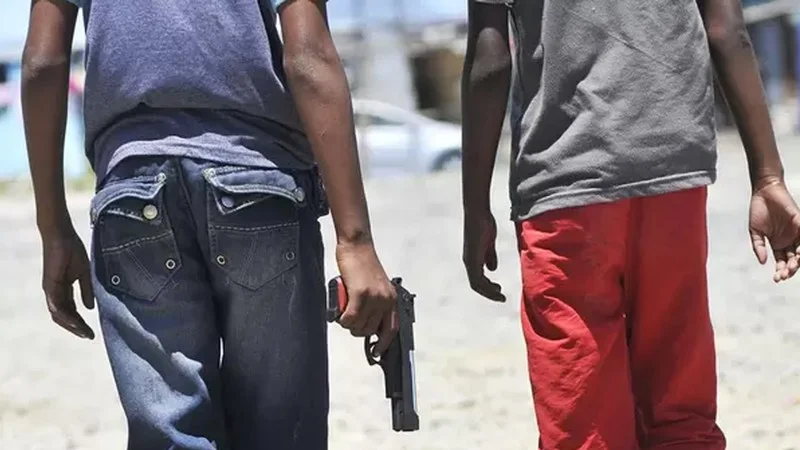
Cape Flats gangs and their affiliations
The Cape Flats has been home to numerous gangs, with different groups operating in different communities and periods.
Some have historically been associated with the 26s and 27s, while others have been linked to the 28s.
Cape Town gangs affiliated with the 28s
The Firm
The Firm is a Cape Town criminal network historically associated with Colin Stanfield and later Ralph Stanfield. It has operated across several parts of the Cape Flats and has been associated with drug dealing, extortion, protection rackets and violent disputes.
Colin Stanfield was regarded as one of the prominent figures in Cape Town’s underworld before his death. Ralph Stanfield subsequently became associated with the organisation.
The Firm has been linked to a number of serious killings connected to conflicts between rival gang networks. These include allegations surrounding the murders of Rashied Staggie, Wendy Kloppers and other individuals.
The organisation is generally associated with the 28s side of Cape Town’s gang landscape, although its relationships with other gangs have shifted over time.
Terrible Josters
The Terrible Josters are a longstanding Cape Flats street gang with strong historical links to areas including Elsies River, Delft and surrounding northern suburbs.
The gang has been involved in prolonged territorial disputes with rival groups, particularly over control of drug markets.
Members have faced charges and convictions for murders, attempted murders and other violent offences. One major case involved a group of alleged Terrible Josters members accused of involvement in multiple killings.
The Terrible Josters have also been involved in conflicts with gangs aligned to the 26s and 27s, including the Sexy Boys.
They are generally associated with the 28s.
Mongrels
The Mongrels are one of Cape Town’s older street gangs. Their history is closely associated with the southern suburbs, including areas around Lotus River, Grassy Park, Ottery and Steenberg.
The gang has been involved in territorial conflicts over drug markets and local control.
One of the most serious conflicts involving the Mongrels was a prolonged feud with the Fast Guns in the Steenberg and Lavender Hill areas.
That conflict resulted in numerous shootings. In December 2019, five-year-old Valentino Grootetjie was killed by a stray bullet during the violence.
The Mongrels have also been involved in other shootings and clashes with rival gangs.
They are generally associated with the 28s.
G-Units
The G-Units have historically operated in Elsies River and Uitsig.
They have been involved in local gang conflicts, particularly with other gangs operating in the northern suburbs.
The G-Units have featured in criminal cases involving murder and gang-related violence. Their presence has also been associated with disputes over territory and the local drug trade.
The organisation appears to have fragmented over time, with different factions and smaller groups emerging from the original structure.
The G-Units are generally associated with the 28s.
Mobsters
The Mobsters are a smaller street-gang grouping compared with organisations such as the Americans or Mongrels.
They have been associated with areas including Bishop Lavis and parts of the northern Cape Flats and have been linked to violent crime and contract-style killings.
Their name has appeared in connection with shootings and murders involving rival gangs.
The Mobsters are generally placed within the 28s network.
Junior Mafias
The Junior Mafias have operated across several Cape Flats communities and have historically been associated with Delft, Heideveld and surrounding areas.
The gang has been involved in armed robberies, shootings, drug dealing and territorial disputes.
Several people identified as Junior Mafias members have faced charges involving murder, attempted murder, firearms and other serious offences.
The gang remains active in parts of the Cape Flats, although its structure has changed over time.
The Junior Mafias are generally associated with the 28s.

Sabela Dictionary PDF: The 26, 27, and 28 Gangster Language
Gangs aligned with the 26s and 27s
Americans
The Americans are one of the largest and most recognisable street-gang groupings in Cape Town.
Rather than functioning as a single tightly controlled organisation, the Americans have historically consisted of different factions and associated gangs operating in various Cape Flats communities.
They have had a particularly strong presence in Manenberg, Hanover Park, Heideveld, Elsies River, Mitchells Plain and surrounding areas.
The Americans have been involved in numerous gang wars, shootings, murders and disputes over drug markets and territory.
One prominent faction is the Ugly Americans, which has been involved in major criminal cases involving murder, attempted murder, robbery, firearms and drugs.
The Americans are broadly associated with the 26s and 27s.
Sexy Boys
The Sexy Boys are a major Cape Flats street gang historically associated with Belhar, Delft and surrounding areas.
They have been involved in numerous turf disputes and gang wars, particularly over drug markets and control of local territory.
The gang has also been involved in conflicts with the Hard Livings, Terrible Josters and other groups.
Several prominent members have been killed in gang-related shootings. In 2019, an alleged Sexy Boys leader and his son were shot dead in Lentegeur.
The Sexy Boys are generally associated with the 26s and 27s.
Junky Funky Kids
The Junky Funky Kids, commonly known as the JFKs, have a strong presence in parts of the Cape Flats, including Heideveld and Ocean View.
They have been involved in violent conflicts with rival gangs.
One particularly significant case involved the murder of Simon Johnson, a member of the rival Terrible Westsiders. Four alleged JFK members were convicted of his murder and received life sentences.
The gang has also been involved in conflict with the Taylor Gang in Ocean View.
The JFKs are generally associated with the 26s and 27s.
Fast Guns
The Fast Guns are strongly associated with Steenberg, Lavender Hill and surrounding southern Cape Flats communities.
They have been involved in drug dealing, robberies, carjackings, shootings and territorial disputes.
Their most notorious conflict has been with the Mongrels. The two groups were involved in a prolonged gang war in the Steenberg and Lavender Hill areas.
The violence included the 2019 killing of five-year-old Valentino Grootetjie, who was caught in the crossfire.
Two men associated with the Fast Guns were subsequently convicted of his murder and sentenced to life imprisonment.
The Fast Guns are generally associated with the 26s and 27s.
Clever Kids
The Clever Kids are particularly associated with Manenberg.
They have historically operated alongside other gangs and have been involved in disputes with groups including the Hard Livings and Ugly Americans.
The gang has featured in cases involving shootings and attempted murders, including clashes between rival groups in Manenberg.
The Clever Kids are generally associated with the 26s and 27s.
Junior Cisko Yankees
The Junior Cisko Yankees, also known as the Cisko Yakkies, are a smaller Cape Flats street-gang grouping.
They have been associated particularly with Mitchells Plain and surrounding communities.
Compared with the Americans, Sexy Boys, Mongrels and Terrible Josters, there is considerably less publicly documented information about their individual activities.
Their name has nevertheless appeared in connection with Cape Town’s broader gang landscape and territorial groupings.
They are generally associated with the 26s and 27s.

The 28 Gangsters: The History, Hierarchy and Culture of the Numbers Gang
The 28s and the Cape Town underworld
The connection between the 28s and street gangs became particularly pronounced in the Western Cape.
The 28s’ prison hierarchy existed alongside a street-level criminal economy that expanded across parts of Cape Town. Drugs, protection rackets, territorial disputes and other criminal activities created lucrative markets for organised groups.
The Firm became one of the names associated with this world.
The organisation was linked to Colin Stanfield and later to his brother Ralph Stanfield. Its history has been connected to the 28s and to organised criminal activity in the Western Cape.
The story illustrates how Cape Town’s gang landscape could extend beyond neighbourhood rivalries. Some groups developed networks that connected street-level activity to larger criminal enterprises.
Why gang identity goes beyond a name
Gang identity in Cape Town can involve far more than a group name.
Numbers culture has traditionally included symbols, tattoos, colours, language and forms of communication. These can indicate affiliation and status within the gang hierarchy.
Inside prison, these symbols can have particular significance.
A tattoo that appears meaningless to someone outside the gang world can communicate information to someone familiar with Numbers culture. The same applies to certain words, numbers and gestures.
That system of communication reinforces the separation between insiders and outsiders.
It also helps explain why Numbers culture has survived across generations. Identity can be passed from one prisoner to another and from prison back into communities.
Cape Town gangs and life on the Cape Flats
Gangsterism has had a profound effect on communities across the Cape Flats.
For residents, the consequences can reach far beyond gang members themselves. Shootings can affect schools, businesses, families and public spaces. Young people can grow up in areas where gang conflict forms part of their everyday surroundings.
That environment can also influence how young people view gangs.
Membership may be associated with money, protection, status or belonging. Those attractions exist alongside violence, imprisonment, intimidation and the possibility of death.
This creates a difficult cycle.
A young person can grow up surrounded by gang culture without ever becoming involved in it. At the same time, repeated exposure can make gang membership appear normal within certain environments.
That tension sits at the heart of the Cape Flats story.
Cape Town gangs in the present day
Today’s gang landscape is not identical to the one that existed several decades ago.
Leadership changes. Groups fragment. Alliances form and break down. New criminal networks emerge while established organisations continue to operate.
That makes it difficult to produce a permanent list of which gang controls which area or which organisation belongs to which Number.
Historical affiliations can still help explain the background, but they should not be treated as a current map.
The same applies to the relationship between prison and street gangs. The connection remains part of Cape Town’s gang culture, but it has never been completely static.
Frequently asked questions
Are the 26s, 27s and 28s the same gang?
No. They are three separate groups within the Numbers prison-gang system. They have distinct traditions, hierarchies and functions.
Are all Cape Flats street gangs part of the Numbers system?
No. Street gangs have their own histories and structures. Some have had reported affiliations with one or more Numbers groups, while others have operated outside those relationships.
Did the Numbers gangs start in Cape Town?
The Numbers tradition is rooted in South African prison history and predates the modern Cape Flats. Historical accounts trace its origins to the nineteenth century, although parts of that history come from oral tradition and remain contested.
Why are the 26s, 27s and 28s associated with Cape Town?
The Western Cape prison system became a major centre of Numbers culture. Over time, prison affiliations became connected to street gangs operating across Cape Town and the Cape Flats.
Are Numbers affiliations permanent?
Not necessarily. Gang relationships have changed across different periods and locations. Historical reporting should therefore be treated as evidence of a particular period rather than a permanent organisational map.
Why is Pollsmoor often mentioned in discussions about Cape Town gangs?
Pollsmoor is one of the major correctional facilities in the Western Cape and has a long history of Numbers gang activity. Its prison population and location have made it central to research and reporting about the relationship between prison gangs and Cape Town’s wider gang culture.
Cape Town gangs remain a difficult subject because the story involves several overlapping histories. The Numbers system, street gangs, prison culture and the social history of the Cape Flats all form part of that picture. Looking at those connections gives readers a fuller understanding of how gangsterism developed and why its effects continue to be felt across communities.
I kept the affiliations framed as historical or reported associations, rather than presenting them as a definitive current gang map. That is important because the available research itself notes secrecy, incomplete information and changes across periods.

Author: Editorial Team
About The Author