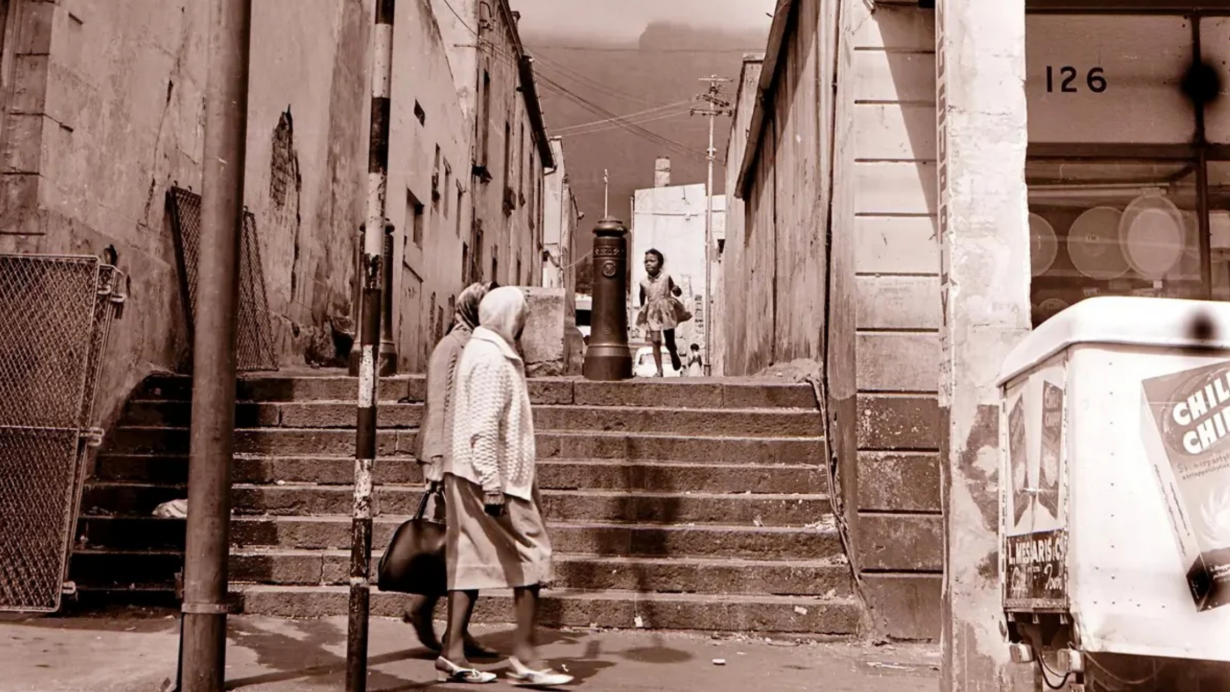
On 11 February 1966, District Six was declared a white area under the Group Areas Act of 1950. The announcement marked the beginning of the end for one of Cape Town’s most diverse neighbourhoods.
By 1982, its community had been dismantled. Over Tens of thousands of people had been forced out of their homes and sent to the barren outlying settlements of the Cape Flats. Bulldozers tore down the houses they left behind, reducing entire streets to rubble.
Families who had lived next door to one another for years found themselves scattered across the peninsula.
The demolition changed the city’s map, but District Six has remained a subject of deep interest, particularly among those who want to know what life was like before the removals. Here are six details that deserve a closer look.
1. Its name dates back to 1867 as a municipal district
District Six owes its name to an administrative division established in Cape Town in 1867. It was originally the city’s Sixth Municipal District, although locals had another name for the area: Kanaldorp.
The earlier name supposedly came from the network of canals that ran across Cape Town. Travellers often had to cross some of these waterways to reach the neighbourhood. In Afrikaans, kanaal means canal.
Another name emerged over time: Kanaladorp. The word kanala comes from Indonesian and means ‘please’. It is believed that the two expressions eventually merged, giving the neighbourhood a name with two possible origins.
2. People from many backgrounds called it home
District Six was home to an extraordinary mix of people. Freed slaves, Cape Malay Muslims, Jewish immigrants and refugees from Eastern Europe lived alongside merchants, artisans and labourers.
The neighbourhood brought together different languages, faiths, cultures and economic backgrounds. Its residents also came from different parts of the world, with many maintaining close connections to Cape Town’s city centre and busy harbour.
For all its differences, the community developed a strong sense of belonging. Neighbours shared streets, supported local businesses and built friendships across cultural and religious lines. District Six offered a glimpse of a city where people from vastly different backgrounds could live alongside one another.
3. Around one in ten Cape Town residents lived in District Six
For a relatively small inner-city neighbourhood, District Six accommodated an astonishing number of people. At its peak, roughly 10% of Cape Town’s entire population lived within its boundaries.
The forced removals devastated this sizeable community. Over 60,000 people were uprooted from their homes and sent to distant parts of the Cape Flats.
Families lost houses, neighbours were separated and familiar streets disappeared beneath bulldozers. For many residents, the relocation meant leaving behind the places where they had grown up, raised children and built their lives.
4. District Six was renamed Zonnebloem before reclaiming its original name
Following the declaration of 11 February 1966, the authorities set about erasing the neighbourhood’s former identity. In 1970, the suburb received a new name: Zonnebloem, the Dutch word for sunflower.
The change came during a period when the apartheid government was dismantling the old community and transforming the area for its designated white population.
Decades passed before the original name received official recognition again. In December 2019, the suburb was formally renamed District Six, restoring the name that generations of former residents had continued to use.
5. A flock of pigeons kept returning to District Six
One of the most touching accounts preserved at the District Six Museum belongs to former resident Noor Ebrahim, who kept pigeons.
After his relocation to Athlone, Ebrahim released his birds in their new surroundings. Yet the pigeons repeatedly made their own journey back to District Six, settling in the neighbourhood they had known before the removals.
Their repeated return became a poignant reminder of the attachment people had to their old homes. Even after families were scattered across the Cape Flats, their memories of District Six remained close.
6. Nelson Mandela returned the first house keys in 2004
The fight to reclaim their land lasted decades for former District Six residents. A deeply emotional milestone came in 2004 when former President Nelson Mandela handed house keys to the first elderly residents returning to the neighbourhood.
The handover marked a major moment in the restitution process, particularly for those who had spent years campaigning for their homes and land.
For the returning residents, the keys represented far greater value than bricks and mortar. They offered the chance to reconnect with a place from which they had been forcibly removed, after years of waiting for justice.
About The Author
