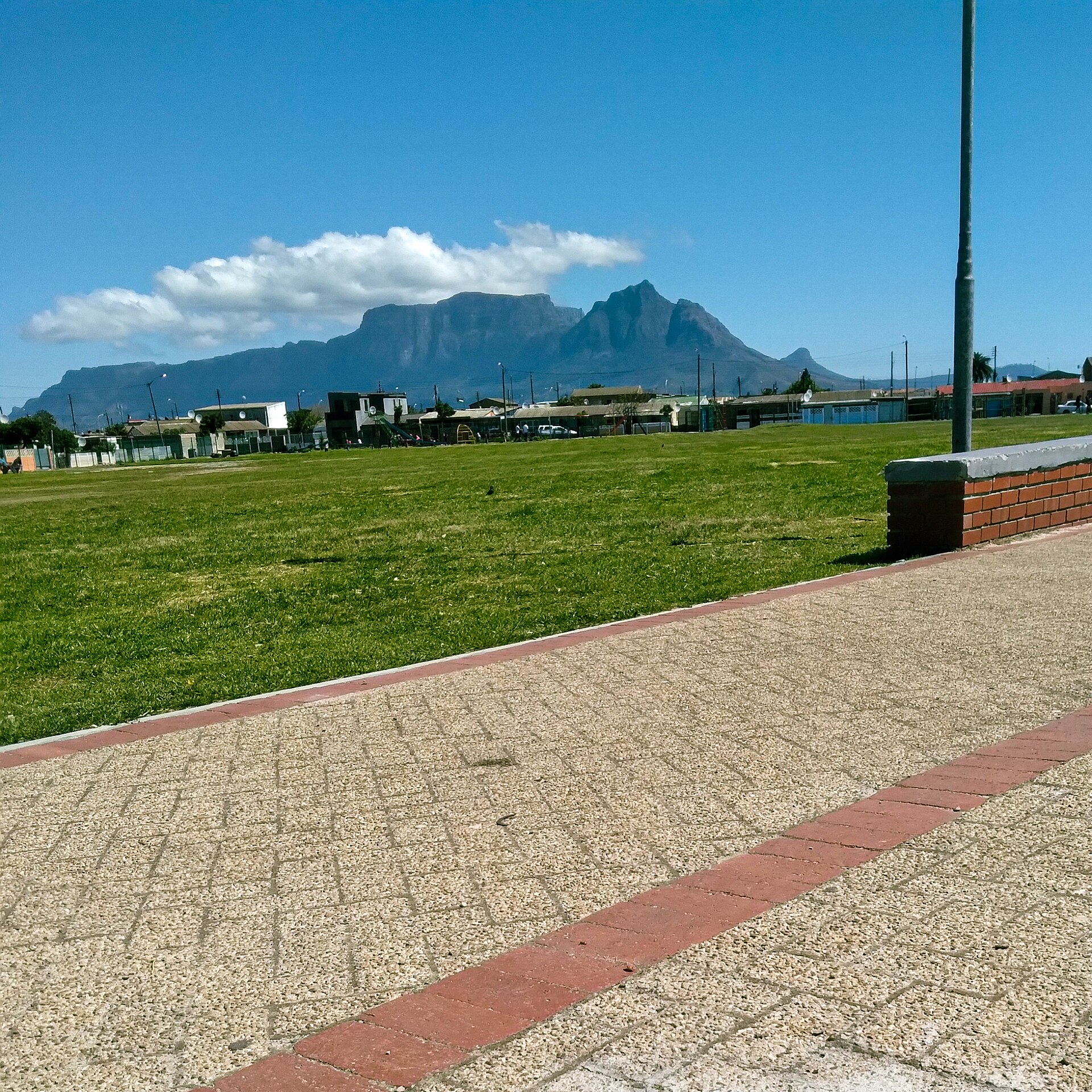
Before any houses were built, the land that would become Heideveld was open grazing territory on the Cape Flats, used mainly as dairy farmland where cattle roamed sandy plains covered in indigenous plants. Among these plants was a small flowering shrub called the heideblommetjie. The name Heideveld comes from two Afrikaans words: heide, referring to heath or heather like vegetation, and veld, meaning open field. The name reflects the natural character of the landscape before development. At the time, the Cape Flats were largely made up of sandy dunes with a scattering of farms and very little urban settlement.
The suburb was officially established in 1962 as part of the apartheid government’s urban planning programme under the Group Areas Act, which forced non white communities out of central Cape Town. Housing was needed for people classified as Coloured who had been removed from established neighbourhoods such as District Six, Claremont, Wynberg, and other parts of the inner city. These displaced families were relocated to newly constructed townships on the Cape Flats, and Heideveld was one of those planned residential areas.

The suburb was laid out as an organised housing scheme with several types of accommodation, including five room detached houses on individual plots, three storey apartment blocks, and smaller dwellings intended for lower income families. Unlike informal settlements, Heideveld was a state planned township that included schools, transport links, and public facilities from the outset. Community institutions took shape quickly. Primary schools opened in the mid 1960s, rail connections linked residents to the city centre, and civic and health services supported the expanding population. Willows Primary School, which opened in 1966, showed how swiftly educational infrastructure followed the arrival of new residents.
Through the 1960s to the 1980s, families uprooted by forced removals gradually formed new social bonds and rebuilt their community lives. Afrikaans and English were the main languages spoken in homes and classrooms, while churches, mosques, sports clubs, and local schools played a significant role in shaping a shared sense of identity and belonging. Heideveld High School, which opened in 1978, became a key institution for young people in the area. Like much of the Cape Flats, the suburb developed a strong neighbourhood identity in spite of economic hardship.
In the final years of apartheid, the broader Athlone and Cape Flats region became increasingly politicised as resistance to the system grew. While major protests tended to take place in neighbouring areas rather than within Heideveld itself, residents still felt the impact of political unrest, economic marginalisation, and heavy policing across surrounding communities. These shared experiences shaped the social and political consciousness of the suburb during that period.
After the transition to democracy in 1994, Heideveld saw gradual improvements. Schools and public infrastructure were upgraded, health services expanded with work on community health facilities between 2010 and 2012, and road and housing projects contributed to urban renewal. At the same time, the suburb continued to face challenges familiar to many Cape Flats communities, among them poverty, unemployment, gang activity in nearby areas, and deep seated inequality rooted in apartheid era spatial planning. Despite these ongoing difficulties, Heideveld is generally regarded as relatively calm compared with some of the surrounding suburbs.
Today Heideveld falls under the Athlone area within the City of Cape Town and covers roughly 1.8 square kilometres. It is home primarily to Coloured families whose ties to the area now stretch across several generations. The suburb has schools, sports fields, a railway station, community health facilities, and a range of religious and cultural institutions that support daily life.
Heideveld represents a larger Cape Town story, tracing a path from open farmland to an apartheid township, from forced displacement to an established community, and from segregation era planning to a modern urban suburb. As part of the living history of the Cape Flats, it stands as a testament to how communities can rebuild identity, belonging, and resilience even in the face of displacement and historical hardship.

Author: Editorial Team
About The Author
