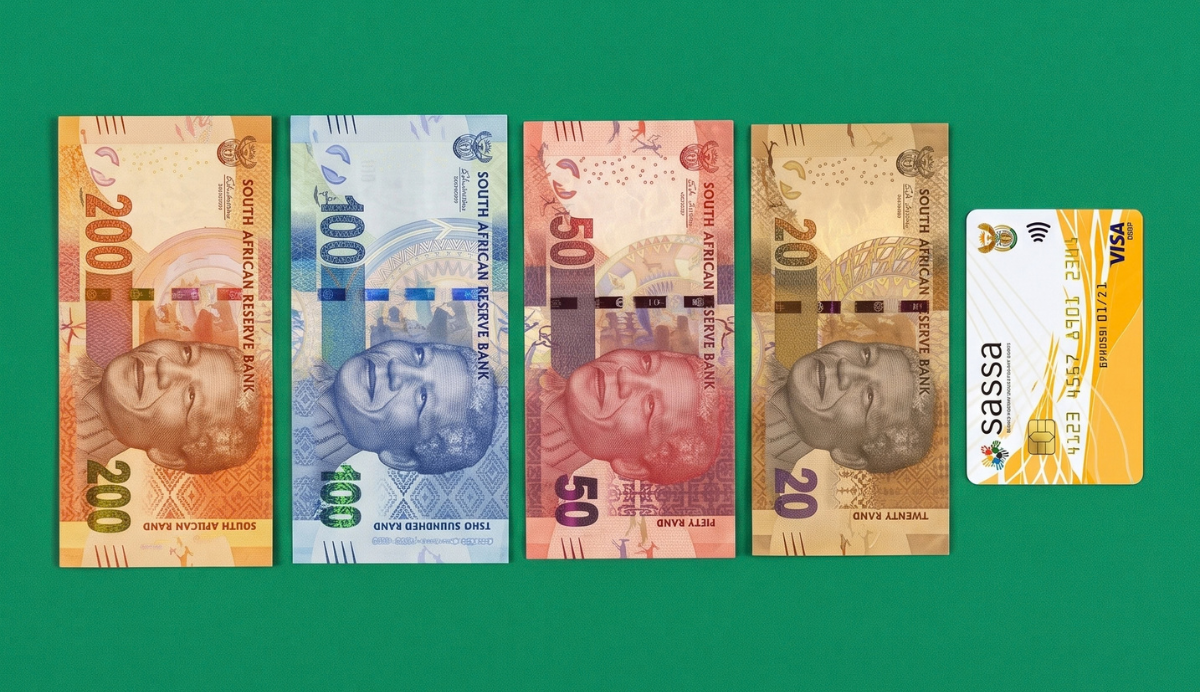
The R370 SRD grant has become a permanent feature of South Africa’s social assistance system, even though it was never designed to be permanent.
The grant was introduced in 2020 as an emergency response to the economic damage caused by the COVID-19 pandemic. At the time, it was intended to last for only six months.
More than six years later, the payment is still in place.
The grant has gone through several extensions, a temporary suspension and a return under revised rules. It was also increased from R350 to R370 in April 2024.
The latest extension takes the R370 SRD grant through to 31 March 2027.
That date has led to an obvious question for millions of recipients and potential recipients: what happens after March 2027?
- What is the R370 grant?
- How the R370 grant started when it was R350
- Why was the R370 grant extended so many times?
- Every R370 and R350 grant extension at a glance
- Why was the R350 grant increased to R370?
- Why does the grant keep getting extended?
- What will happen to the R370 grant after March 2027?
- Could the R370 amount increase after March 2027?
- Could the R370 grant be replaced by a permanent grant?
- Why government has not simply made the R370 grant permanent
- What should R370 grant beneficiaries watch for?
- Frequently asked questions about the R370 grant
What is the R370 grant?
The R370 grant is the current version of the COVID-19 Social Relief of Distress Grant administered by SASSA.
It is aimed at working-age people with insufficient means who do not receive other forms of social assistance or qualifying UIF support.
SASSA has made the grant available to qualifying people between 18 and 60 years old who live in South Africa and meet the relevant requirements. The current rules also cover South African citizens, permanent residents, refugees, asylum seekers with valid permits or visas and certain special permit holders.
The grant remains subject to monthly verification.
This is different from permanent grants such as the Older Persons Grant or Child Support Grant. The SRD was created as a temporary measure and has continued through successive policy and budget decisions.
How the R370 grant started when it was R350
The origins of the R370 grant go back to the first months of the COVID-19 pandemic.
South Africa entered a national lockdown in March 2020. Millions of people lost employment or income while many businesses were unable to operate normally.
On 21 April 2020, President Cyril Ramaphosa announced a special COVID-19 Social Relief of Distress payment of R350 a month for unemployed people who did not receive another social grant or UIF payment. The initial period was six months.
The grant began paying from May 2020.
SASSA had to build a new digital application and verification system because many of the intended recipients were not already receiving grants. The first applications opened nationally on 11 May 2020. More than 3.5 million applications had been submitted within three days.
The original arrangement was therefore very different from the grant people know today.
It was:
- introduced specifically because of COVID-19;
- intended to last for six months;
- set at R350 per month;
- aimed at unemployed working-age people;
- administered through a new digital system;
- designed as temporary emergency relief.
The government later extended the first round beyond its original six-month period.
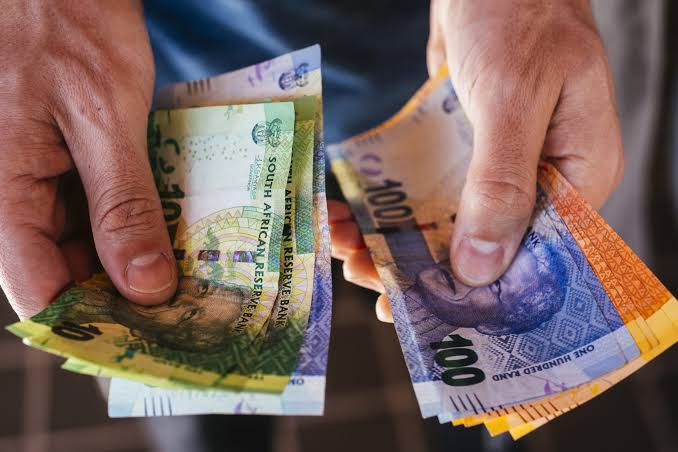
Why was the R370 grant extended so many times?
There is no single reason behind all the extensions.
The circumstances changed over time, but several themes have remained consistent.
South Africa continued to have high unemployment and large numbers of people with little or no income. The grant also reached millions of people who had previously been outside the main monthly social grant system.
Government research found that the SRD grant reduced food poverty among unemployed working-age people. The Department of Social Development has also reported that the grant assisted people while they searched for formal and informal work.
At the same time, government has repeatedly faced the question of whether it can afford to turn the temporary grant into a permanent form of income support.
That tension explains much of the grant’s history.
On one side is the continuing need for income assistance among unemployed adults.
On the other is the cost of maintaining a large monthly payment from the national budget.
This is why the grant has repeatedly been extended for another defined period instead of being converted immediately into a permanent grant.
Every R370 and R350 grant extension at a glance
The history is more complicated than a simple annual extension because the first version continued beyond its original six months, then stopped for a period in 2021 before being reinstated.
| Period | Grant amount | What happened |
| May to October 2020 | R350 | Original six-month COVID-19 SRD period |
| November 2020 to January 2021 | R350 | First three-month extension |
| February to April 2021 | R350 | Further three-month extension |
| August 2021 to March 2022 | R350 | Grant reinstated after a three-month gap |
| April 2022 to March 2023 | R350 | One-year extension |
| April 2023 to March 2024 | R350 | Further one-year extension |
| April 2024 to March 2025 | R370 | Grant increased by R20 and extended |
| April 2025 to March 2026 | R370 | Further one-year extension |
| April 2026 to March 2027 | R370 | Further one-year extension |
The Parliamentary Budget Office’s timeline records the early extensions through April 2021, the August 2021 reinstatement and the subsequent annual extensions.
The early extensions
The first six months were initially intended to run from May to October 2020.
The grant was then extended for three months to January 2021 and for another three months to April 2021. It subsequently stopped for three months before being reinstated in August 2021.
The July 2021 reinstatement was linked to the continuing economic effects of COVID-19. President Ramaphosa said improved revenue collection had made the reinstatement possible and announced payments of R350 until March 2022.
The 2022 extension
In February 2022, the President announced another one-year extension to March 2023.
The stated reason was the continuing need for assistance among people without sufficient means. The President referred to the grant’s benefits for more than 10 million unemployed people and said it would be extended to ensure that people did not endure hunger.
National Treasury allocated R44 billion for that 12-month extension.
The 2023 extension
In the 2023 Budget, government extended the SRD for another year to March 2024.
R36 billion was allocated for the extension. At this stage the grant remained R350 a month.
The extension also came amid debate about the long-term future of income support for unemployed adults.
The 2024 extension
The 2024 Budget brought two changes.
The grant was extended to March 2025 and its monthly value was increased from R350 to R370 from April 2024.
This was the first increase in the value of the grant since it was introduced.
The 2025 extension
The 2025 Budget extended the SRD in its existing form until March 2026.
National Treasury allocated R35.2 billion for this purpose. The government also said the SRD would be used as a basis for developing a more sustainable form of income support for unemployed people.
The 2026 extension
The latest funded extension runs from April 2026 until March 2027.
National Treasury allocated an additional R36.4 billion for the SRD grant. The amount remained R370 per month.
The Department of Social Development then amended the regulations to give legal effect to the extension. The amended regulations specify R370 per month for the period from 1 April 2026 to 31 March 2027.

Why was the R350 grant increased to R370?
The R350 payment remained unchanged for about four years.
By 2024, inflation had reduced what R350 could buy compared with when the grant was introduced.
The increase was announced as part of the 2024 Budget process. Finance Minister Enoch Godongwana said the government had reached an agreement to raise the amount to R370 from 1 April 2024. He also referred to the rising cost of living faced by people dependent on social grants.
The Department of Social Development subsequently amended the regulations to increase the monthly amount by R20.
The National Treasury allocated an additional R1.6 billion to partially fund the increase.
The R20 increase should therefore be understood as a limited adjustment after several years at R350. It was not an automatic annual inflation adjustment.
A Parliamentary Budget Office analysis noted that after the R20 increase, the inflation-adjusted buying power of the grant from its 2020 starting point was equivalent to about R303.
That helps explain why the R370 amount has continued to attract debate.
Why does the grant keep getting extended?
The repeated extensions reflect a policy problem that has not been resolved.
The SRD was created for an emergency. South Africa still has a large population of working-age people who have little or no income.
Removing the grant would therefore have an immediate effect on millions of households.
At the same time, making the grant permanent requires the government to find a reliable long-term source of funding. The National Treasury has repeatedly highlighted the pressure that permanent social spending places on public finances. The 2023 IMF assessment also noted that a permanent SRD would require sustainable financing because South Africa faced limited fiscal space and elevated debt pressures.
There is also a policy question about what income support for unemployed adults should look like.
The government has considered a range of approaches over several years, including a permanent basic income support system and stronger links between social protection and employment.
The 2025 Budget said the SRD would form a basis for a sustainable form of income support.
The 2026 SONA went further. President Ramaphosa said the grant would be continued and redesigned to better support livelihoods, skills development, work opportunities and productive activity.
This means the debate is no longer only about whether the R370 grant should exist for another 12 months.
It is increasingly about what should replace or evolve from the temporary COVID-era model.
What will happen to the R370 grant after March 2027?
The 2026 State of the Nation Address stated that the SRD grant will continue and that government intends to redesign it so that it can better support livelihoods, skills development, work opportunities and productive activity.
However, there is an important qualification. The 2026 Budget allocated R36.4 billion to keep the grant going until 31 March 2027 at R370 per month. It did not establish a new payment amount for the period after March 2027.
So the position in September 2026 is this:
- The R370 grant is funded until March 2027.
- There has been no announced increase to the R370 amount for the 2026/27 financial year.
- The President has said the grant will continue.
- Government is working on a redesigned form of income support.
- The final amount and structure after March 2027 have not been announced.
There is no announced R370 payment rate for April 2027 onwards. There is also no final legislation establishing a permanent replacement grant with a confirmed amount and eligibility rules.
So it would be premature to say that beneficiaries will definitely receive exactly R370 after March 2027.
It would also be misleading to say that the grant is simply scheduled to disappear after March 2027.
The government’s stated intention is to continue and redesign it.
Could the R370 amount increase after March 2027?
Possibly, but no future amount has been announced.
The government has not announced an automatic annual increase for the SRD.
In 2026, the R370 payment stayed unchanged while other major social grants increased. The National Treasury specifically stated that the SRD would remain at R370 and allocated R36.4 billion to maintain it until March 2027.
Any future increase would therefore have to come through a future budget, revised regulations or a new income support framework.
There are already calls for the grant to be increased because of inflation and the cost of basic necessities. Parliamentary submissions have raised concerns about the gap between the R370 payment and the food poverty line.
That does not mean an increase has been approved.
For now, R370 remains the official monthly amount for the funded 2026/27 period.
Could the R370 grant be replaced by a permanent grant?
This is one of the most important developments to watch.
Government has been working towards a broader Basic Income Support policy for people of working age who have no income.
The Department of Social Development has described the continuation of the SRD as an opportunity to advance social security reforms, including the possibility of Basic Income Support for people in the 18 to 59 age group who have no income.
The President’s 2026 announcement also said the SRD would be redesigned around livelihoods, skills development, work opportunities and productive activity.
That means the future system may not look exactly like today’s R370 grant.
It could retain an income payment while changing the eligibility rules, administration or relationship with employment and skills programmes.
However, the final design has not been announced.
Why government has not simply made the R370 grant permanent
There are several financial and policy considerations.
The cost is substantial
Millions of people receive the SRD.
The 2026 Budget allocated R36.4 billion for the extension to March 2027.
A permanent programme would require a recurring source of funding rather than another short-term allocation.
South Africa has limited fiscal room
National Treasury has repeatedly raised concerns about the sustainability of additional permanent spending.
A permanent income grant would have to be financed alongside pensions, disability grants, child grants, healthcare, education, infrastructure and other government priorities.
Government wants a longer-term income support model
The SRD was created as an emergency measure.
Government has increasingly acknowledged that income support for unemployed adults requires a more permanent policy framework.
The 2025 Budget said the SRD would form the basis for a sustainable form of income support.
The 2026 SONA then announced a redesign of the grant.
This suggests that the eventual system could be broader than the current COVID-19 regulations.
What should R370 grant beneficiaries watch for?
The biggest announcements are likely to come through the national budget, Department of Social Development regulations and SASSA notices.
Pay particular attention to:
- any new regulations for the post-2027 grant;
- changes to the monthly amount;
- changes to the income threshold;
- changes to eligibility requirements;
- the proposed Basic Income Support framework;
- whether the existing SRD remains under its current name;
- whether employment or skills requirements are introduced;
- the funding allocation for 2027/28 and later years.
The 2026 SONA specifically said government would redesign the grant during 2026.
Frequently asked questions about the R370 grant
Will the R370 grant end in March 2027?
There is no current government plan simply to end the grant at that point. The President said in February 2026 that the grant would continue. However, the currently approved R370 funding runs only to 31 March 2027, so the future structure still needs to be finalised.
Will the R370 grant increase in 2027?
No increase has been announced for the period after March 2027. The current amount is R370. Any new amount would need to be announced through a future budget or revised regulations.
Why was the grant increased from R350 to R370?
The R20 increase was introduced from April 2024 after the grant had remained at R350 since its introduction. Government cited rising living costs and the need to improve the grant.
How many times has the R350 or R370 grant been extended?
The grant has gone through several extensions since its launch. These include extensions through January and April 2021, reinstatement from August 2021 to March 2022, annual extensions to March 2023, March 2024, March 2025, March 2026 and March 2027.
Why does government keep extending the grant?
The main factors are continuing poverty and unemployment, the grant’s reach among people without other income support, evidence of its effect on food poverty and the absence of a fully implemented permanent income support system. Government must also balance these needs against the cost of long-term social spending.
Is the R370 grant becoming a permanent grant?
Government is working towards a longer-term income support system. The President has said the SRD will be continued and redesigned. A final permanent grant structure has not yet been established in law.
Will the R370 grant still be R370 after March 2027?
That has not been announced. R370 is the funded monthly amount through March 2027. The post-March 2027 amount will depend on the future income support framework and budget decisions.
Who can currently apply for the R370 grant?
SASSA states that qualifying applicants must generally be between 18 and 60, live in South Africa and have insufficient means. The regulations cover South African citizens as well as specified categories of permanent residents, refugees, asylum seekers and special permit holders. Applicants must also meet the other requirements under the SRD regulations.
What is the income threshold for the R370 grant?
The current SRD means test is R624 per month according to SASSA’s published information. The threshold is separate from the R370 payment amount.
Is the R370 grant the same as ordinary Social Relief of Distress?
The COVID-19 SRD grant is administered through the Social Relief of Distress framework but is a specific temporary programme created during the pandemic. Ordinary Social Relief of Distress is a separate form of short-term assistance for people facing particular crises.

Author: Editorial Team
About The Author
