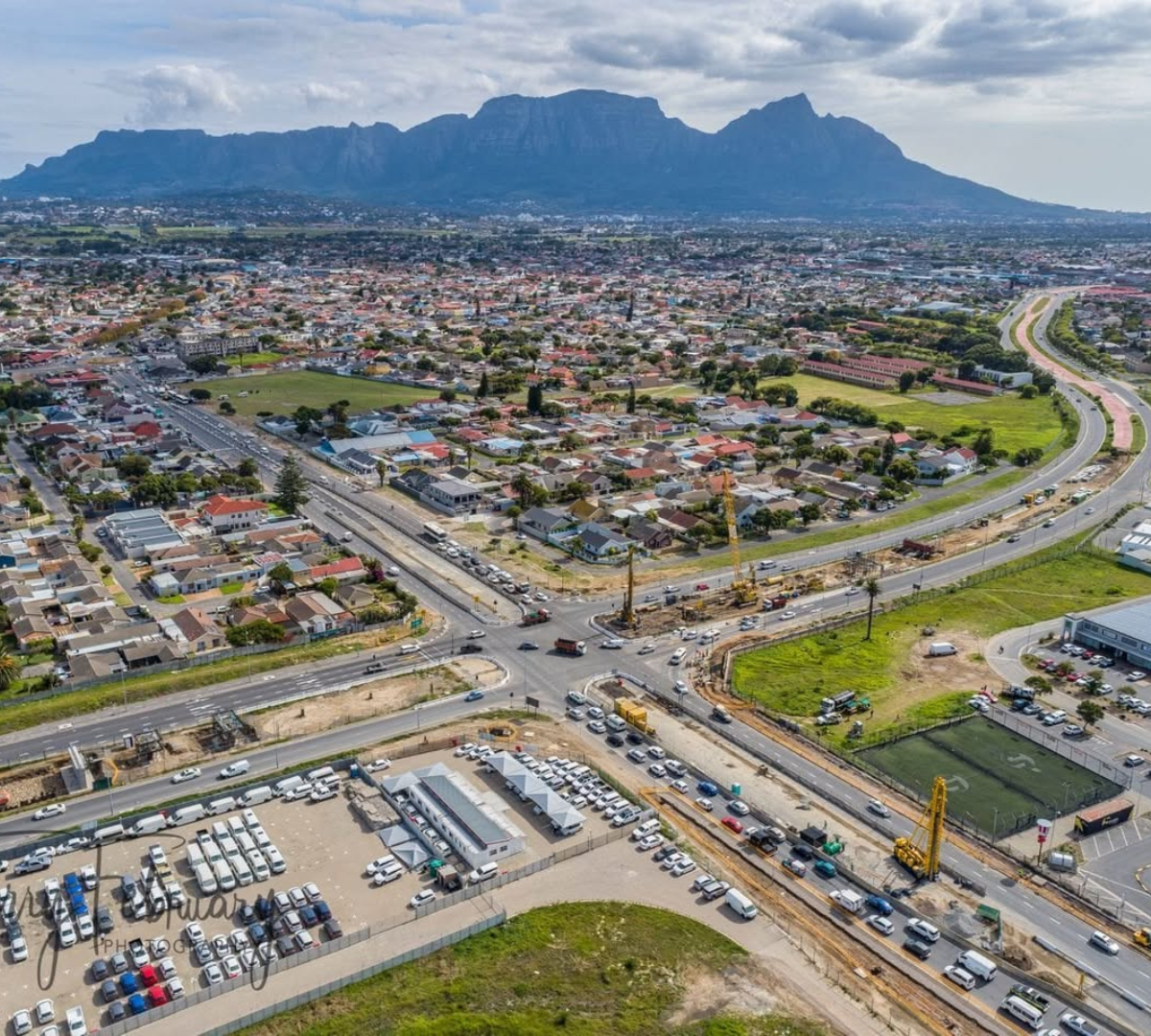
Lansdowne sits on the Cape Flats area, on the eastern edge of the Southern Suburbs — close enough to Claremont and Rondebosch to be convenient, but with a character all its own.
It is primarily residential, but Lansdowne is far from being a suburb where there is little to do. Its streets are lined with family homes, mosques, churches, schools, takeaways, independent businesses and everyday shops. The area also has strong connections to Cape Town’s Muslim and Coloured communities, while its history reflects the much wider social changes that have shaped the city.
If you are visiting Lansdowne, considering moving here or simply want to know more about the area, this guide covers its location, history, things to do, shopping, food, transport and what life in the suburb is actually like.
- Where is Lansdowne?
- A brief history of Lansdowne
- What is Lansdowne known for?
- Things to do in Lansdowne
- Where to eat in Lansdowne
- Shopping in Lansdowne
- Getting around Lansdowne
- Schools and community facilities
- What is it like to live in Lansdowne?
- Is Lansdowne close to Cape Town’s beaches?
- Lansdowne for visitors
- Places near Lansdowne
- The character of Lansdowne
Where is Lansdowne?
Lansdowne is in Cape Town’s Cape Flats area/Southern Suburbs, roughly 10 kilometres southeast of the city centre. It lies east of the M5 and borders Rondebosch East, Crawford, Wetton, Claremont, Kenwyn and Athlone.
The suburb is built around several important roads. Lansdowne Road is the obvious one, running from the Claremont side of the Southern Suburbs through Lansdowne and further towards the Cape Flats. Imam Haron Road is another major local route and was formerly known as Lansdowne Road in parts of the area.
Its location is one of its biggest advantages. You can reach Claremont, Kenilworth, Rondebosch and Athlone relatively easily, while the M5 provides a direct connection towards other parts of Cape Town.
A brief history of Lansdowne
Lansdowne’s history cannot be separated from Cape Town’s broader history of forced segregation and the changes that followed apartheid.
Lansdowne was shaped by the racial segregation policies of apartheid, with the Group Areas Act and forced removals contributing to major changes in the surrounding Southern Suburbs and the communities that settled in the area.
Since 1994, the area has become considerably more diverse, with people from different racial, cultural and religious backgrounds living alongside one another.
That history is still visible in the suburb’s community institutions. Mosques, churches, schools, sporting facilities and civic spaces sit within a relatively compact area, giving Lansdowne a strong neighbourhood identity.
The City of Cape Town’s 2011 suburb profile also shows that what is officially grouped under Lansdowne includes several smaller areas, including Buckingham, Eden Klein, Nerissa Estate, Romp Vallei, Sunlands, Turf Hall and Yorkshire Estate.
What is Lansdowne known for?
Lansdowne has strong connections to Cape Town’s Muslim and Coloured communities, with Islamic institutions, mosques and businesses playing an important role in local life.
Places of worship are an important part of local life. Masjid Al-Furqaan, associated with Islamia College, is one of the area’s prominent Islamic institutions. Churches representing several Christian denominations are also present.
Food is another part of Lansdowne’s identity. The area has a selection of halal restaurants, takeaways, bakeries, grocery stores and smaller food businesses, making it a useful place to explore if you want to experience some of Cape Town’s everyday Muslim food culture rather than the more tourist-orientated version found in the city centre.
Things to do in Lansdowne
Lansdowne is not a traditional sightseeing destination, so you should not arrive expecting a long list of major tourist attractions. Its appeal is more local.
Explore the neighbourhood
One of the best ways to experience Lansdowne is simply to explore its main streets and local businesses. Imam Haron Road is particularly useful for getting a sense of the area’s commercial activity, while the surrounding residential streets reveal the suburb’s mixture of older homes and newer development.
It is the kind of place where everyday Cape Town life is more interesting than a formal attraction.
Visit Turfhall Stadium
Turfhall Stadium is a prominent, multi-purpose sports complex located in Belthorn Estate, Cape Town, and is recognised as the premier home of softball in the Western Cape.
Originally conceived as part of Cape Town’s 2004 Olympic bid programme, the Turfhall softball stadium was completed in 1999 at a cost of R11 million to establish a world-class diamond field. The facility is managed by the City of Cape Town and has a spectator seating capacity of 3,500 people.
Key Features and Facilities
- Main Sports: It primarily serves as the central hub for the Cape Town Softball Association, hosting major league women’s and men’s softball tournaments.
- Multi-Purpose Field: The complex features an adaptable field layout that accommodates local community soccer matches.
- Additional Amenities: The stadium precinct includes adjacent indoor facilities, such as public squash courts utilised by local clubs.
Use Lansdowne as a base for nearby attractions
Lansdowne is also well positioned for exploring attractions elsewhere in the Southern Suburbs.
For gardens and mountain scenery, Kirstenbosch is a relatively straightforward drive away in Newlands. For shopping, cinemas and a much larger restaurant selection, Claremont and Kenilworth are close by.
You do not need to stay in the centre of Cape Town to reach the city’s major attractions, although traffic can make journey times considerably longer during peak periods.
Where to eat in Lansdowne
Food is one of the better reasons to spend time in Lansdowne.
The area is particularly useful for halal dining, with local restaurants offering everything from casual meals to grilled meat and takeaway-style food.
One of the better-known options is Talladega Grill on Imam Haron Road. It has become a recognisable local dining spot and is a good example of the area’s preference for substantial, casual meals rather than fine dining.
You will also find smaller independent food businesses and grocery shops scattered around the suburb. The Fancy Pantry on Flamingo Crescent is one example of the type of local food-focused business found in the area.
The bigger point is that Lansdowne is better approached as a neighbourhood for local food than as a restaurant destination. Some of the best finds are the small businesses that serve the people who live nearby.
Shopping in Lansdowne
Shopping in Lansdowne is mainly about convenience and everyday needs rather than luxury retail.
Lansdowne Corner Shopping Centre is a nearby retail hub. It provides access to shops and services without requiring residents to travel into a larger shopping district.
There are also independent retailers along the suburb’s main roads. For example, Going Under Clothing Lansdowne is a local clothing retailer, while smaller general stores and specialist businesses add to the area’s neighbourhood shopping character.
For a much larger shopping trip, Kenilworth and Claremont are nearby. Kenilworth Centre, Access Park Shopping Mall and Cavendish Square all offer substantially more retail choice.
Getting around Lansdowne
Lansdowne is reasonably well connected by Cape Town standards.
The suburb has its own railway station on the Cape Flats Line, while Golden Arrow buses and minibus taxis also serve the area.
For motorists, the M5 is particularly important because it provides a connection towards the northern and southern parts of Cape Town. Lansdowne Road also provides an important east-west connection between the Southern Suburbs and areas further into the Cape Flats.
The catch is familiar to anyone who lives in Cape Town: peak-hour traffic can change a short trip into a much longer one. If you are commuting regularly, your exact location within Lansdowne and your destination are worth considering rather than simply looking at the distance on a map.
Schools and community facilities
Lansdowne has a range of schools serving different age groups. Schools listed in the suburb include Windsor High School, Groenvlei High School, Oaklands High School, York Road Primary School, Portia Primary School and Windsor Primary School.
The suburb also has a public library, civic centre, police station and clinic. These facilities give Lansdowne the infrastructure of an established residential community rather than a newer development built primarily around housing.
For families, this is an important part of Lansdowne’s appeal. Many of the everyday services people need are available within or close to the suburb.
What is it like to live in Lansdowne?
Lansdowne is best suited to people who value location, established community networks and access to everyday amenities over a highly polished suburban environment.
The housing is predominantly residential, with a mixture of established properties and newer homes. The suburb does not have the same concentration of upmarket developments found in parts of Claremont or Constantia, nor does it have the tourist atmosphere of areas closer to the city centre.
Instead, Lansdowne feels lived-in.
There are family homes, schools, religious institutions, local shops and sporting facilities woven into the neighbourhood. Its cultural diversity is one of its defining characteristics, and the area has a particularly strong connection to Cape Town’s Muslim community.
Is Lansdowne close to Cape Town’s beaches?
Not particularly.
Lansdowne is inland, so you will need to drive to reach Cape Town’s better-known beaches. This is worth remembering if you are choosing accommodation or a home based on easy beach access.
The suburb’s location makes more sense for someone who wants access to the Southern Suburbs and Cape Flats than for someone who wants to walk from their front door to the ocean.
Lansdowne for visitors
For tourists, Lansdowne is unlikely to replace the V&A Waterfront, Bo-Kaap, Camps Bay or the city centre on a first-time Cape Town itinerary.
That does not mean it is uninteresting.
Lansdowne gives visitors an opportunity to see a more ordinary side of Cape Town, particularly its food culture, religious diversity, local businesses and residential communities. It is also a useful base if you have family or friends in the Southern Suburbs or need to be close to areas such as Athlone, Crawford, Kenwyn and Rondebosch East.
The suburb is particularly worth considering if your idea of exploring Cape Town extends beyond the standard tourist circuit.
Places near Lansdowne
One of Lansdowne’s strengths is how many different parts of Cape Town are within reach.
Claremont is close by and offers extensive shopping, restaurants and public transport connections. Kenilworth has major shopping centres, while Rondebosch and Newlands provide access to more restaurants, green spaces and mountain attractions.
Further afield, Kirstenbosch is one of the easiest major attractions to combine with a stay in the Southern Suburbs. Kirstenbosch National Botanical Garden is particularly worthwhile if you want to combine Cape Town’s indigenous gardens with mountain scenery.
The city’s central attractions are also accessible by road, although traffic should always be factored into your plans.
The character of Lansdowne
What makes Lansdowne interesting is not a single landmark. It is the combination of things that make up a functioning Cape Town neighbourhood.
Its location puts it between several very different parts of the city. Its history reflects the consequences of apartheid and the social changes that followed. Its mosques and churches reflect its religious diversity, while its restaurants, shops and community facilities show how much of Cape Town’s culture exists outside the tourist centre.
Lansdowne is therefore best experienced as a lived-in suburb rather than a sightseeing checklist. Come for the food, local businesses, community atmosphere or proximity to other parts of Cape Town, and you get a much better sense of why the area has remained an important part of the city’s Southern Suburbs.
About The Author
