
A message from the South African Social Security Agency (SASSA) asking you to attend a grant review can raise immediate concerns about your household budget. You may wonder why your name has been flagged, whether your next payment will arrive on time and which documents you need to take to an office.
A SASSA grant review is a check by the South African Social Security Agency to confirm that a beneficiary still qualifies for social assistance. The process can affect older persons, people receiving disability grants and caregivers who depend on monthly payments to support their households.
Although a review can cause anxiety, receiving a review notification does not automatically mean that a grant has been cancelled. It means SASSA needs to verify information relating to the beneficiary’s eligibility. SASSA has urged recipients to respond to official requests and keep their personal details up to date.
- What is a SASSA grant review?
- Why does SASSA review social grants?
- When can SASSA request a grant review?
- SASSA grant review AI data matching
- SASSA grant review process
- What happens to your grant during a review?
- What if you cannot attend a SASSA office?
- What if SASSA suspends or lapses your grant?
- How to contact SASSA about a grant review
- Frequently asked questions about SASSA grant review
What is a SASSA grant review?
A grant review is an assessment of whether a person continues to qualify for the social grant they receive. SASSA may request updated information or supporting documents to verify details supplied during the original application.
The agency conducts reviews under South Africa’s social assistance legislation. Beneficiaries must disclose their income and report relevant changes in their circumstances after approval.
A review may involve checking:
- Income from employment, pensions or other sources.
- Bank accounts and financial information relevant to the grant’s means test.
- Marital status and other personal details.
- Medical eligibility where a disability or care dependency grant requires assessment.
- Identity information and records used to verify continued eligibility.
- Other circumstances that could affect entitlement to a particular grant.
A review does not automatically mean that a beneficiary has committed fraud or has lost their entitlement. SASSA must assess the information available and determine whether the person still qualifies.
Why does SASSA review social grants?
Social grants support millions of South Africans who rely on assistance for basic household needs. The review system helps direct public funds to people who qualify under the relevant rules.
There are several reasons why SASSA may request an updated assessment.
Undisclosed income: A beneficiary may have started working, received additional income or experienced a financial change after approval. The agency may request evidence to establish whether the person remains within the applicable income limits.
Changes in personal circumstances: Marriage, divorce, a change in residence or other relevant developments may affect eligibility or the information held on the beneficiary’s record.
Medical eligibility: Certain grants depend on medical assessments. Updated medical evidence may be required where the review concerns continued eligibility for a disability or care dependency grant.
Identity and life verification: SASSA also uses verification measures to help identify duplicate claims, deceased beneficiaries and identity discrepancies.
Protection of public funds: Reviews help the agency identify payments made in error and investigate suspected abuse of the social assistance system.
Importantly, an unusual bank transaction or an apparent discrepancy in a database may prompt further checks, but beneficiaries should have an opportunity to submit relevant information for assessment.
When can SASSA request a grant review?
Reviews form part of the administration of social grants. SASSA may contact selected beneficiaries when information suggests that their circumstances require verification.
The agency has intensified targeted reviews since the 2025/2026 financial year. Its public statements have highlighted beneficiaries whose recorded financial information raised questions about whether they continued to qualify.
A review may be requested when:
- SASSA identifies a possible discrepancy in income records.
- Information from another institution suggests a financial change.
- Personal details require confirmation.
- Medical or other grant-specific eligibility needs reassessment.
- The agency requests updated documentation as part of its review programme.
There is no single appointment date that applies to every beneficiary. The timing depends on the agency’s review activities and the individual case.
SASSA sends review notifications by SMS to the contact number recorded on its system. Beneficiaries should keep their cellphone numbers and residential details updated so they can receive official communication.

SASSA Appeal: How to Appeal a Declined Grant and Check Your Appeal Status
SASSA grant review AI data matching
Data matching helps SASSA compare beneficiary records against information held by other institutions. These checks can highlight discrepancies that require further investigation.
The phrase SASSA grant review AI data matching is often used when discussing automated eligibility checks. However, it is important to separate documented verification practices from claims about specific artificial intelligence systems. Official statements describe data matching, income verification, biometric checks and links with institutions such as banks, credit bureaus, SARS, NSFAS and government departments. They do not establish that every review is decided by an AI system.
The process can involve several stages:
- Record comparison: Information held by SASSA is checked against relevant external records.
- Discrepancy identification: A difference in reported income, employment information or other details may flag a record for review.
- Beneficiary verification: The agency may request bank statements, payslips, affidavits or other supporting evidence.
- Eligibility assessment: Officials assess the information provided and determine whether the beneficiary continues to qualify.
A discrepancy is a reason to investigate, rather than proof of wrongdoing. Records may be outdated, income may have ended, or a transaction may have an explanation that the initial data does not show.
For instance, a person who previously worked but has since lost their job may appear in employment-related records. Current payslips, an employment termination letter or an affidavit explaining their circumstances may help clarify the position.
The SASSA grant review AI data matching should therefore be understood in the context of data verification. Beneficiaries should focus on the evidence requested in their official notification and provide accurate information that explains their current circumstances.
SASSA grant review process
The SASSA grant review process starts when the agency identifies a beneficiary for further verification and sends a notification requesting action. The steps required depend on the grant type and the information SASSA needs to confirm.
Step 1: Check the notification
Read the SMS carefully and confirm that it refers to a grant review. Take note of any instructions, deadlines or requests for specific documents.
If the message seems suspicious, contact SASSA through its official channels before sharing personal information. Avoid sending identity documents or banking details to unverified numbers.
Step 2: Prepare your documents
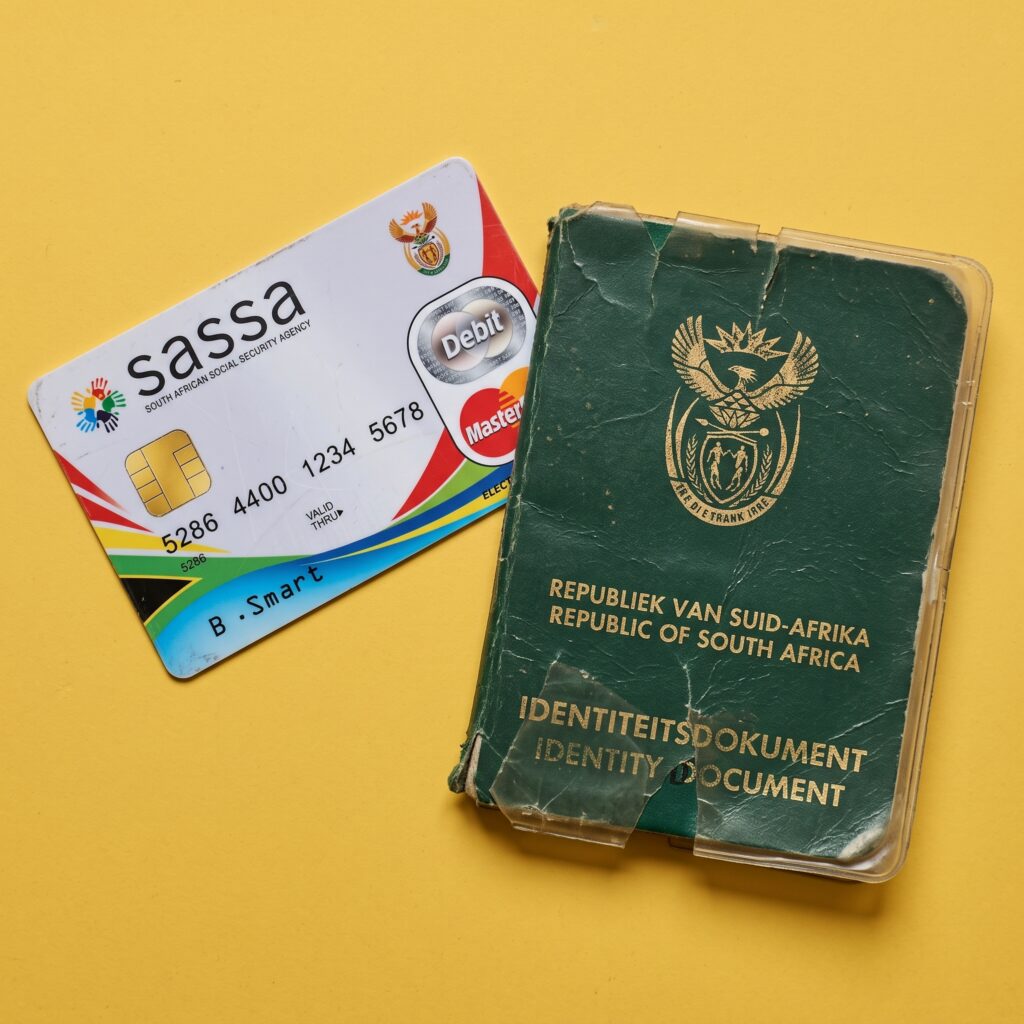
SASSA’s published instructions list several documents that may be required during a review. These include a valid South African identity document, recent bank statements, proof of income and proof of residence. Additional records may be necessary depending on the grant and the circumstances under assessment.
| Document | Why it may be required |
| South African ID | Identity verification |
| Bank statements for the previous three months | Review of financial information |
| Recent payslips or pension slips | Verification of income |
| Affidavit or employment termination confirmation | Explanation of unemployment or changed income |
| Proof of residence | Confirmation of residential details |
| Marriage certificate, divorce order or relevant death certificate | Verification of marital or family circumstances |
| Medical report, where applicable | Assessment of medical eligibility |
| Children’s birth certificates or school records, where requested | Verification of grant-specific details |
Bring the documents relevant to your case, together with any additional items specified in the notification. Contact your local office if you are uncertain about a particular requirement.
Step 3: Attend the review
SASSA’s published guidance directs beneficiaries selected for review to their nearest local office or designated service centre. Follow the instructions in your notification and ask staff to explain any information that needs clarification.
Keep copies of documents submitted and request proof of attendance or submission where available.
Step 4: Explain any discrepancies
If the information on record differs from your current circumstances, explain the reason and supply supporting evidence.
For example, if a salary was recorded after your employment ended, an employment termination letter and an affidavit describing your current income may help SASSA assess the case. If a bank transaction is mistaken for regular earnings, provide evidence of its source where possible.
Step 5: Follow up on the outcome
Ask whether additional information is required and how you will be notified of the decision. Keep your contact details updated and retain any reference numbers or correspondence.
The SASSA grant review process may take time, particularly where further verification is needed. Responding promptly and submitting complete documentation can help reduce avoidable delays.
SASSA Status Check Failed: What It Means and What You Can Do
What happens to your grant during a review?
A review does not always result in a suspension, but payment arrangements may be affected while SASSA verifies eligibility.
In its July 2025 statement, the agency explained that payments for identified beneficiaries could be delayed temporarily until they completed the review. Later official communications have also warned that failure to respond to a review request may lead to suspension or the lapsing of a grant.
SASSA has also issued specific payment arrangements for beneficiaries under review. In July 2026, for example, it announced that affected beneficiaries would receive their August payment on the fourth payment day, after the regular three-day payment cycle. That arrangement applied to the stated payment period and should not be assumed to apply to every month.
If your payment has been delayed, check your official notification and contact SASSA to establish whether a review is responsible. A delay alone does not confirm that you have lost your eligibility.
What if you cannot attend a SASSA office?
Some beneficiaries may be unable to travel because of age, illness or disability. SASSA’s published guidance states that a procurator may be appointed to represent a beneficiary who is bedridden or unable to visit an office.
Contact your local SASSA office to establish the applicable requirements and the documents needed to arrange representation.
If transport costs or long queues are a concern, ask whether digital services are available for the specific task. SASSA has announced plans to expand self-service facilities, but its February 2026 communication stated that reviews were being conducted at designated offices or service centres at that time. Confirm current arrangements before travelling or relying on an online service.
What if SASSA suspends or lapses your grant?
If SASSA determines that you no longer qualify, or if a required review remains incomplete, your grant may be suspended or lapse under the applicable rules.
Start by asking the agency for the reason behind the decision and what steps are available in your case. If the decision appears to rely on incorrect information, gather evidence that addresses the discrepancy and ask SASSA how to submit it for reconsideration.
Keep copies of all correspondence, submitted documents and proof of attendance. If you disagree with the outcome, ask for written reasons and information on the relevant appeal or reconsideration procedure. The applicable process and deadline depend on the decision and grant involved.
How to contact SASSA about a grant review
Beneficiaries can contact SASSA through its official channels to verify a notification, ask about documentation or follow up on a review.
- Toll-free number: 0800 60 10 11.
- Website: Official SASSA website.
- Local office: Contact or visit the nearest SASSA office for assistance with a review.
You may use the toll-free number for enquiries about grant payments, qualifying requirements, office locations and application-related queries.
A SASSA grant review can be worrying when household expenses depend on a regular payment. However, a review request is a call to verify eligibility, and it does not by itself establish that a beneficiary has done anything wrong. Keep your records up to date, respond to official requests, submit relevant evidence and follow up through verified SASSA channels. These steps put you in a better position to resolve questions about your grant and understand what happens next.
Frequently Asked Questions About the SASSA Grant Review
Frequently asked questions about SASSA grant review
1. What is a SASSA grant review?
A SASSA grant review is an assessment of whether a beneficiary continues to qualify for social assistance. SASSA may request updated financial records, personal information or medical documents to verify eligibility.
2. Why has SASSA selected me for a grant review?
SASSA may select you if it identifies discrepancies in income records, changes in personal circumstances or information that requires verification. Selection for a review does not automatically mean that you have committed fraud or lost your eligibility.
3. How will I know if SASSA requires a grant review?
SASSA may notify you by SMS using the cellphone number recorded on your beneficiary profile. Read the message carefully, check the instructions and verify any suspicious communication through an official SASSA channel.
4. Which documents do I need for a SASSA grant review?
Depending on your circumstances, you may need your South African ID, recent bank statements, payslips, proof of residence or documents explaining changes in employment or income. Beneficiaries applying for disability related grants may also need updated medical evidence.
5. Can SASSA suspend my grant if I fail to complete a review?
Yes. Failure to respond to a review request may result in the suspension or lapsing of a grant under the applicable rules. Contact SASSA promptly if you cannot attend an appointment or submit the requested documents by the stated deadline.
6. How does SASSA grant review AI data matching work?
SASSA compares beneficiary information against relevant records from other institutions to identify discrepancies that may require further investigation. Automated data checks can flag concerns, but a discrepancy alone does not establish that someone is ineligible or has committed fraud.
7. What should I do if my SASSA grant payment is delayed during a review?
Check your SMS notifications and contact SASSA on its toll free number, 0800 60 10 11, to establish whether your payment has been affected by the review. Ask whether further documents are required and keep records of any submissions or reference numbers.
8. Can I complete my SASSA grant review online?
The available review methods depend on SASSA’s current instructions and your individual case. Some reviews require an office visit or the submission of supporting documents. Check your notification or contact SASSA through its official website at www.sassa.gov.za to confirm the approved procedure.
9. What can I do if I disagree with the outcome of my SASSA grant review?
Ask SASSA for the reasons behind its decision and check whether you can submit additional evidence or request reconsideration. Keep copies of relevant documents and ask about the applicable appeal procedure and deadline for your particular grant.
About The Author
