
Different cultures have their own ways of addressing women, and in everyday conversations, those names pop up often. We hear them in music, films, and social media, and sometimes we use them ourselves—without always stopping to think where they come from or how they’re received.
These nicknames can feel playful or affectionate in the right space. Among friends, they might even bring people closer or feel like a shared joke. But in other situations, they carry weight. The same word that feels warm in one moment can feel loaded or uncomfortable in another. It all depends on who’s saying it, how it’s said, and what the relationship looks like.
Language like this reflects far more than word choice. It mirrors how women are seen, spoken to, and spoken about in a group or society. These names can carry history, stereotypes, or pride, and people may reclaim or reject them for different reasons.
So, let’s open up that conversation. We’re taking a closer look at some of the words our community uses when referring to women. You might find some odd, outdated, funny, or even uncomfortable but we think they’re worth unpacking. So that note, we must mention that this post is not meant to offend anyone. We are simply making this available for informational purposes.
In this post:
The Names We Give to Women

Girlie
Means a little girl or young woman. You’ll hear it when someone doesn’t know the person’s name. Guys sometimes shout it from across the street to get a woman’s attention.
Goose, Cherrie, Kin
These words all mean the same thing: a girl, a chick, or someone’s girlfriend. Men use them when they don’t know a woman’s name.
Jintoe (pronounced gen-too)
Jintoe refers to a woman who is seen as promiscuous. It’s not a compliment and is usually used to insult someone’s character.
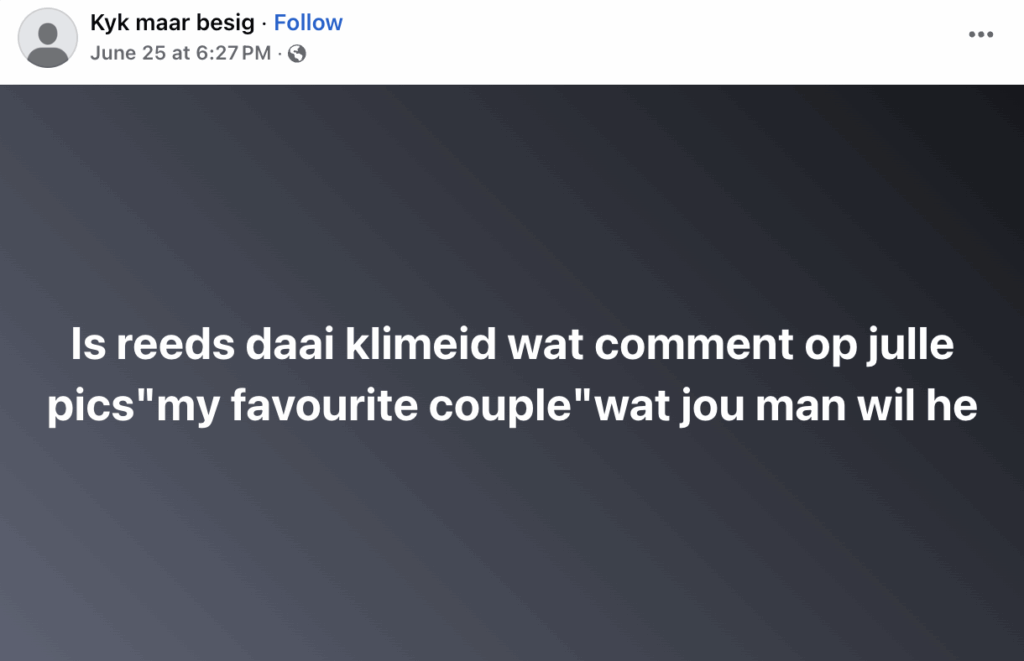
Klimeid (pronounced kluh-maid)
Old-school but still around. Klimeid comes from “klein meisie kind,” meaning little girl. It might sound outdated, but it’s still in use in some homes.
Ma
Even when the woman has no children of her own, “Ma” is used as a sign of respect for older women in the community.
Meid (pronounced maid)
This word was used insultingly during apartheid by white Afrikaners to describe coloured women working as maids. Coloured people still use this word today in moments of anger or disrespect toward a woman.
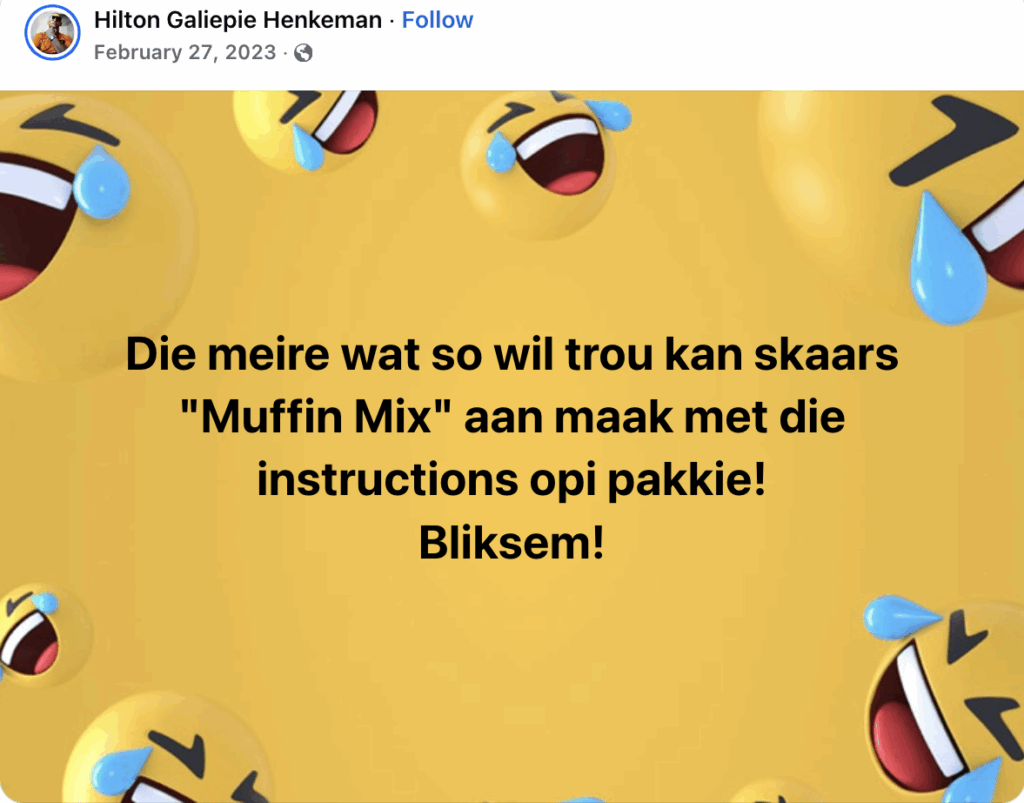
Meire (may-ruh)
Even though it comes from the same word as “meid,” it’s used differently. It’s lighter and more playful, often thrown around in banter between friends.
Meisa (pronounced may-sah)
Derived from “meisie,” this word refers to a girl and is usually used to address someone directly in conversation.
Merrimpie (pronounced merim-pee)
Merrimpie, derived from madam, thus meaning “little madam,” refers to a girl who carries herself like she’s older than she is. The word can be said in a playful or slightly critical tone.
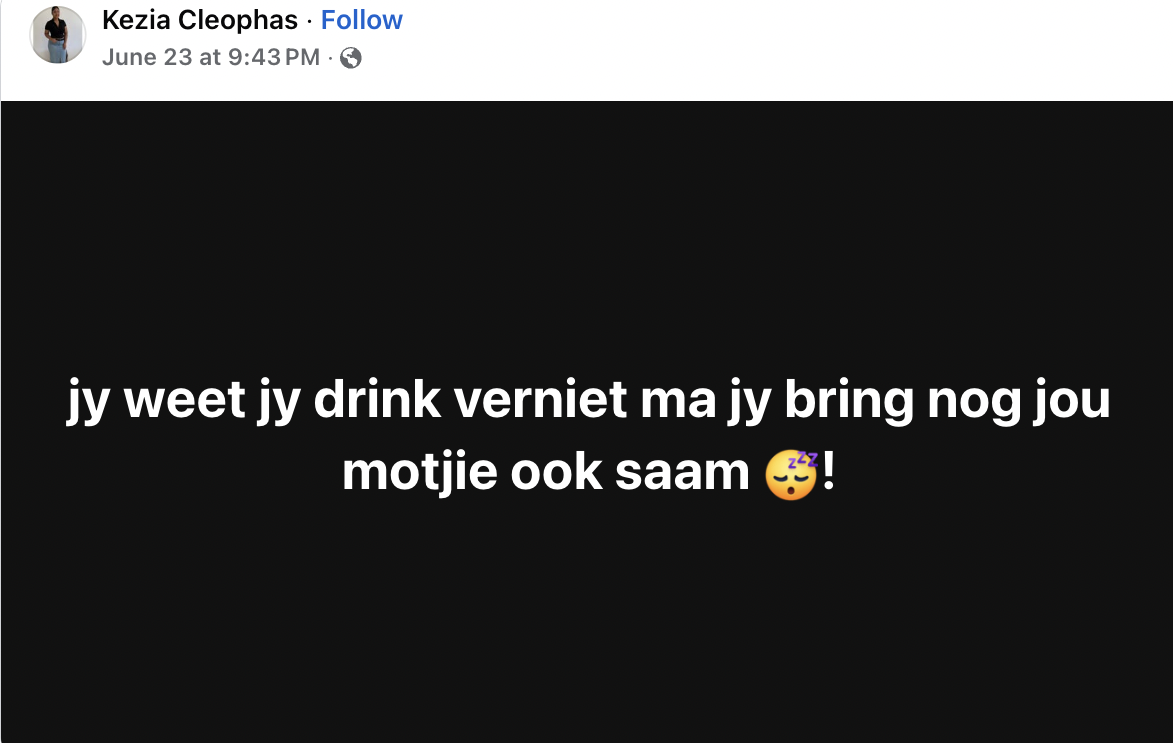
Motjie (maw-chee)
This word has roots in the Malay language, where “makcik” or “makchik” means an older woman or aunty. It’s a respectful term in Cape Malay culture. These days, people also use it to refer to someone’s girlfriend.
Nanna
This one means blood aunt. It’s used in family circles and usually signals close relationships between relatives.
Nannas
Nannas means a strong and independent woman and is often used directly. A popular expression, “hier’s jou nannas,” is used when someone is showing off or proving a point.
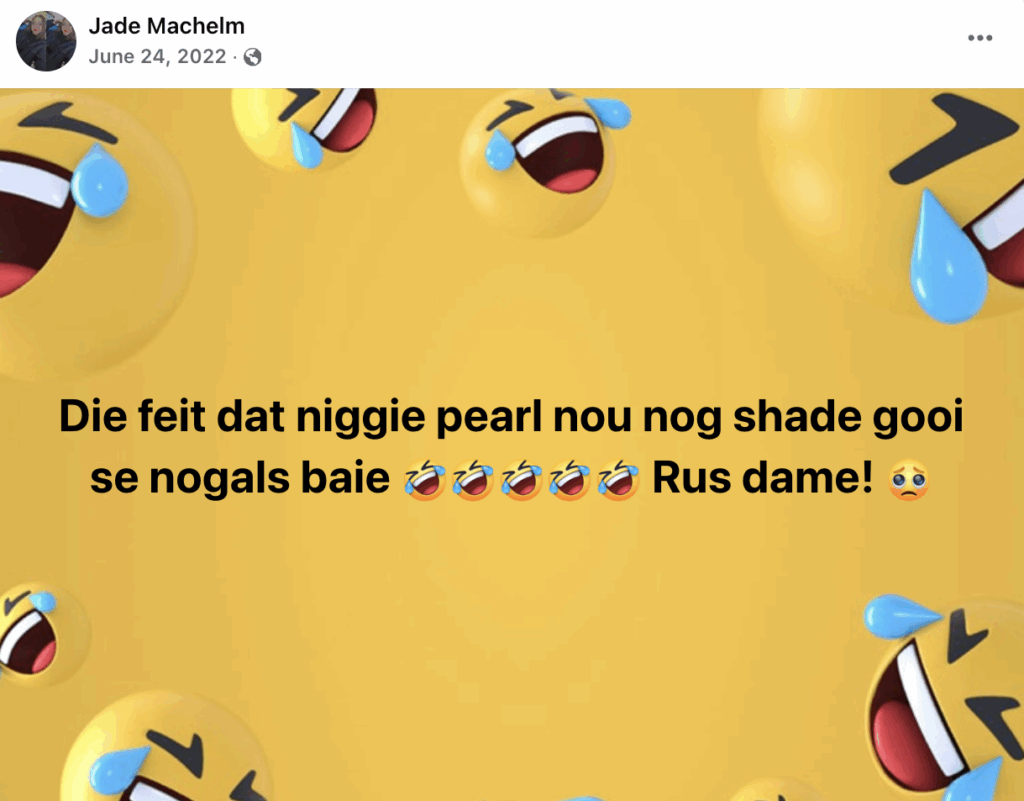
Niggie (pronounced nih-ghee) or Niggie Pearl
While it means cousin in Afrikaans, here it’s used in a similar way to how “bro” is used. It can mean a girl, friend or someone you’re close to.
Nooi (pronounced noy)
An archaic word for a young woman, girlfriend, or lady. Depending on how it’s used, it can also mean sweetheart or mistress. Rarely used on the Cape Flats; it’s mostly heard in the small towns in the Western Cape.
Nunu
Nunu is a warm and affectionate term. It’s used for someone special, like a girlfriend or a child who’s close to your heart.
Ousie (pronounced oh-see)
Refers to an older woman, and comes from “ousus,” which means older sister. Often said with familiarity and some level of respect.
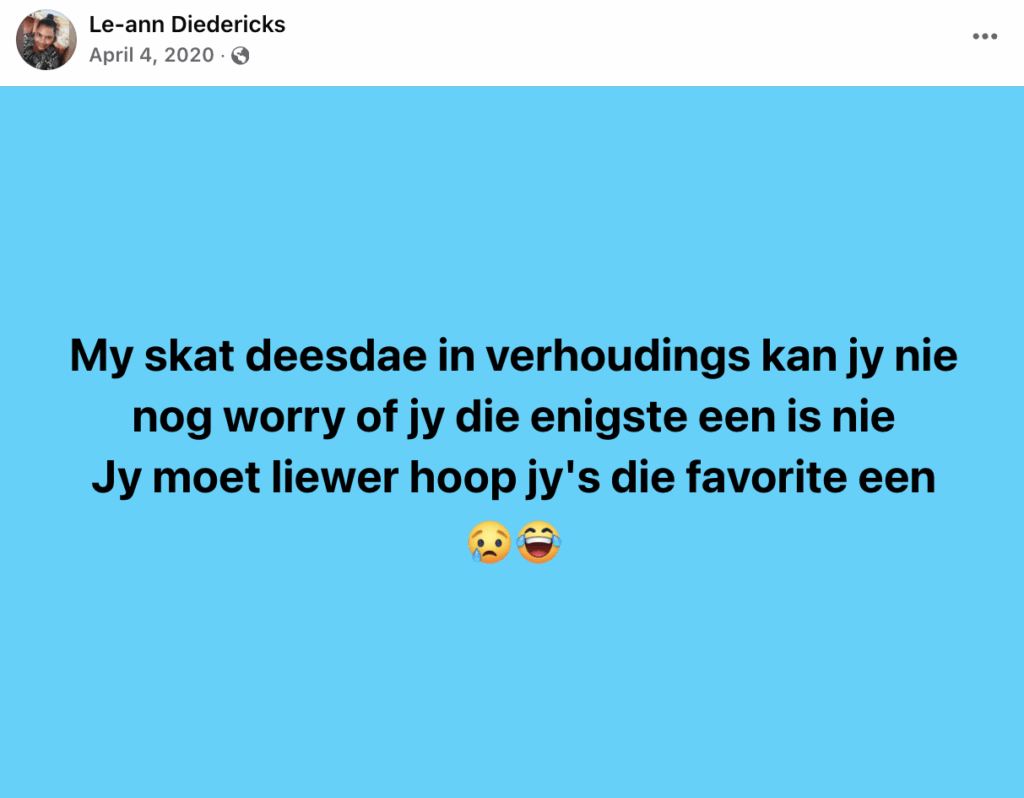
Skat
This translates to “treasure” or “darling” in Afrikaans. While it can sound sweet, it’s often used with a tone of warning or sarcasm, especially when someone’s being put in their place.
Taanie (pronounced tah-neeh)
This word refers to someone’s or one’s own mother or an older woman in the community. It’s a term many people grow up using when speaking to elders.
Tietie (pronounced tee-tee)
This word means an older woman. It can also be used as a nickname.
Vrou/vroumens
This Afrikaans word means woman. It’s a neutral word used to describe an adult female.


Author: Editorial Team
About The Author
