How Christian Funeral Traditions Honour Loved Ones
Cape Christian funerals have a way of being both heavy and light at the same time.
Cape Christian funerals have a way of being both heavy and light at the same time. I know we all joke about that one aunty who dramatically wants to throw herself into the grave, even though no one is quite sure how she’s related to the deceased. The cousins squabbling over who was left off the pallbearer list. And let’s not forget Uncle so-and-so who always seems to have a bit too much to drink at family gatherings, funerals included.
But those exaggerated stories and petty family drama? They’re just the sideshows. The real story is what happens underneath it all.
For me, the heart of a funeral is the way it brings the community together. It’s in the hymns that make your chest tighten and how someone always finds the right words to honour a life. It’s in the hugs that last just a little longer. It’s when you laugh through tears because someone’s grandkid just said something funny. It’s in the food, too. The kind that makes the kitchen feel like a place of healing. But most of all, it’s in the people. The ones who come, no matter what, because that’s what you do. You show up. You grieve together.
Allow me to show you the customs of a Cape Christian funeral. If it’s your first time, you’ll know what to expect. If you’ve been before, let this be a reminder of how tradition keeps us close, even when it feels like we’ve lost so much.
The Day They Pass
The day a person dies, whether at home or in a hospital, is filled with emotion and respect. Family members are called to come and view the body before it’s moved. It’s important—this final moment together. If someone dies in an accident, family members might rush to the scene, coming together in an outpouring of love and support.
The Days Or Weeks After
After the passing, the family house becomes a second home for all the visitors coming to pay their condolences. Like I said, people show up. Not just to grieve, but to offer help with cooking, cleaning, and running errands. The kitchen is always buzzing with aunties making cups of tea and coffee. Platters of biscuits are passed around to feed the guests.
Family begins to arrive from all corners. Some from across town. Others from far-off places like the Northern Cape. Durban, even. New Zealand, or Dubai. Someone will say, “You don’t remember me? Last time you were still in nappies!” And there will be that cousin with your uncle’s eyebrows, a stranger to you now, but one that’s suddenly family. It’s a reunion in the midst of loss. You’ll smile, even though you don’t, and enjoy the connections that feel like they’ve always been there.
Meanwhile, decisions need to be made. Who will be pallbearers? What hymns should we sing? The funeral booklet needs sorting. Photos are dug up in drawers or Facebook to find a good one for the front page. Details are shared on the family WhatsApp groups and Facebook.
Then, the memorial service takes place. Sometimes it’s in a church, sometimes in a hall. During COVID, drive-by memorials were common. Wherever it’s held, it’s always filled with people who loved the deceased. At this time, the death certificate gets handed out for those who need it to get off from work.
The Day We Say Goodbye
The day of the funeral—“the lyk” as we call it—arrives, and you can feel it in the air. The Lyk is more than just the body; it’s everything that surrounds it—the service, the people, the memories.
Saturday is the go-to day for funerals, because it’s when most of us aren’t at work, and we can gather without having to rush around.
The day starts early. Between 7 and 8 a.m., the body is brought home, and there’s a sense of calm. A bus will also pull up later to transport relatives and friends who don’t have cars. Everyone is welcome to come, no one is left out.
Booklets are handed out to those attending, and they’re not just for practical purposes. These booklets are keepsakes—sometimes laminated for the family—and they always feature the photo of the deceased, along with their birth and death dates. There’s a special way of writing those dates too: the birth date is referred to as “sunrise,” and the death date as “sunset.” The booklets also hold details of the service, the order of events, and the names of the pallbearers.
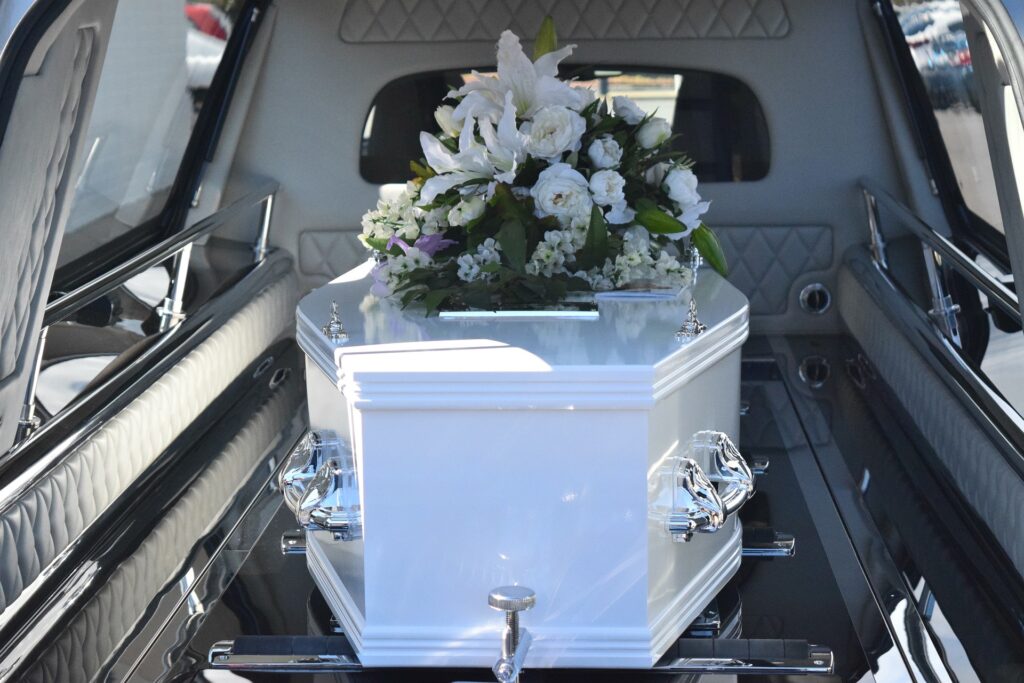
The body is displayed in the living room in an open coffin. The casket is placed such that it would be carried out head first. Sometimes, the coffin itself often reflects the personality or hobbies of the deceased. While most are traditional wooden boxes, some choose more custom send-offs. Inside the home, flowers cover every surface.
Many will take this chance to see their loved one one last time, leave cotton balls (”kapok”) or flowers on their face, or gently touch their forehead or cheek in a final farewell. However, not everyone chooses to view the body, with some preferring to remember their loved one as they were in life.
The room is full of people coming and going, talking softly, and offering support. The elderly and close family get seats, while everyone else gathers outside, sometimes spilling out into the street. The street itself becomes a crowded space, lined with parked cars.
The service itself usually takes place at a church at around 9 or 10 a.m, even if the person wasn’t particularly religious. There, a pastor will lead a sermon, and eulogies will be shared. Choirs and loved ones may perform songs. Each church has its own customs, but the focus is always on celebrating the life of the person who’s passed.
After the church service finishes, around 11 a.m. the coffin goes to the cemetery for burial.
Throughout the day as the coffin travels from home to church to cemetery, a long procession of cars follows behind. If the deceased was part of a club or organisation, members will parade or stand guard. For prominent gang members, gun salutes are not unheard of. School friends might come in uniform to pay respects to a classmate.
There’s a final sermon graveside before the coffin is lowered. The pastor will throw a fistful of earth onto the casket and recite “for dust you are and to dust you shall return.” Mourners are given flowers to toss on as well.
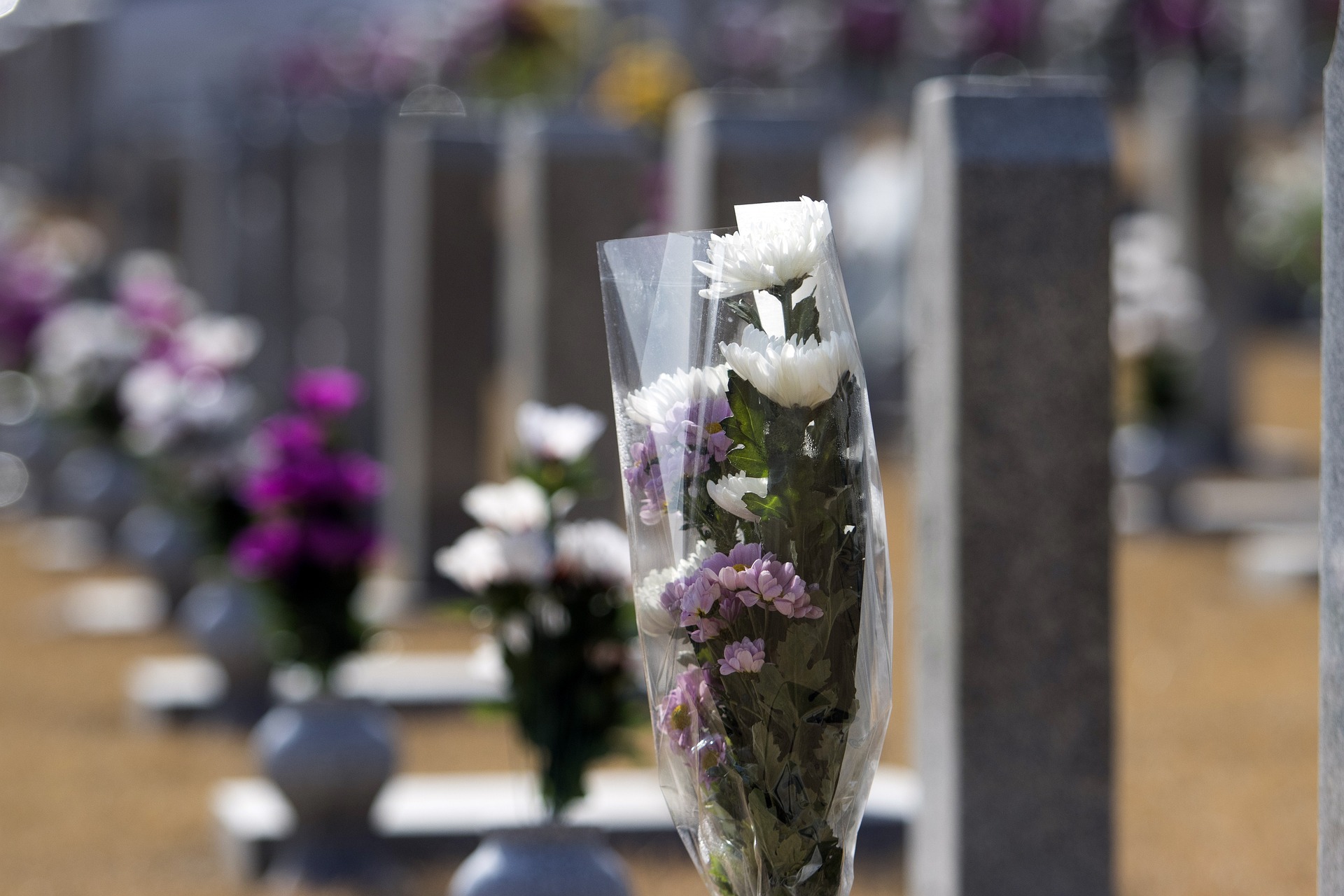
The earth is shovelled by anyone who feels moved to do so. In fact, everyone takes a turn. It’s a hands-on way of laying them to rest. A wooden cross is placed at the grave, often adorned with flowers. You might spot homemade decorations—plastic flower petals set into a plastic bottle filled with water, something a family member put together as a personal touch. There are some funerals where doves or balloons are released, adding a symbolic touch to the farewell. The family will take photos, often behind the wooden cross, capturing a moment of bittersweet remembrance.
Close family members remain at the grave even as others begin to leave.
After the Service
At the family home, a reception is held to provide nourishment and community. Dishes like akhni, triangle sandwiches, or fried chicken and salads are distributed in white styrofoam containers alongside sweet treats such as koesisters and cake, as well as tea, coffee, or juice. Another stereotype is that there’s always that aunty who can’t leave without a couple of bakkies for her husband and kids.
And when the house quiets down, the clinking of dishes and the laughter of family members are the only sounds as the after-tears gathering begins. Oh, the “after-tears!” Maybe it’s the older adults lingering in the living room, sipping tea and catching up. Maybe it’s that cousin who pulls out the bottle of Grants they bought the day before, or the cousins chipping in for a case of beers. A little buzz, a little bond, and suddenly the tears have turned to stories
When the day is done, the house is quiet. All that remains is a funeral booklet, tucked into a cabinet at home, perhaps next to others from family, friends, and neighbours who’ve passed on.
It’s a simple thing, a small piece of paper whose pages will get worn with time, but it carries so much more.
About The Author