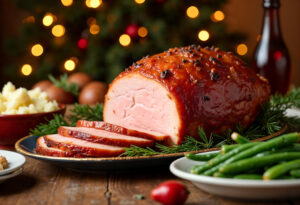
How to Cook Corned Beef for Your Christmas Lunch Table

Corned beef or soutvleis holds a place of honour as part of the trinity of Christmas cold meats, served alongside a sticky glazed gammon and a tender beef tongue.
Since this is a meal typically served at large gatherings with numerous side dishes, preparation begins in advance. The soutvleis is always cooked the night before, allowing it to chill completely so it can be carved into thin, clean slices on Christmas morning.
Jump to Recipe
Traditional South African Corned Beef
Ingredients
- 2–2.5 kg Uncooked corned beef (silverside or brisket)
- 2 Large carrots, chopped into chunks
- 2 Onions, peeled and quartered
- 3 Celery stalks, with leaves
- 4 Bay leaves
- 10 Whole allspice (pimento) berries
- 10 Whole black peppercorns
- 4 Whole cloves
- 1 Cinnamon stick
- 1 tbsp Brown sugar
- 1 tbsp Vinegar (brown or cider vinegar)

Instructions
1. The Soak
Most store-bought corned beef in South Africa is quite salty. To ensure it isn’t overpowering, place the meat in a large pot and cover it with cold water. Let it soak for about an hour, then discard that water.
2. The Slow Simmer
- Place the meat back into the pot and cover it with fresh cold water (the water should be at least 5cm above the meat).
- Add the onions, carrots, celery, bay leaves, allspice, peppercorns, cloves, and cinnamon stick.
- Stir in the brown sugar and vinegar.
- Bring to a boil, then immediately turn the heat down to a very low simmer.
- Cooking Time: Allow roughly 50–60 minutes per 500g. The meat is ready when it is tender enough that a fork slides in and out with no resistance.
- Once cooked, take the pot off the heat. Leave the meat to cool completely in its own cooking liquid. This keeps the interior from drying out too fast while it’s still hot.
- Once the pot is cool enough, remove the meat, pat it dry, and stud the fat layer with whole cloves. Wrap it tightly in foil or clingfilm and place it in the fridge overnight.
3. Serving on Christmas Day
When you are ready to assemble your Christmas lunch platter, take the cold brisket out of the fridge.
Using a very sharp carving knife, cut the brisket into thin slices across the grain. You’ll notice the natural texture of the brisket fibres. The result is a cold, salty, and dry slice of beef that holds its shape on a fork.
About The Author