
Explore Traditions, Heritage, Identity
Before there were cities or laws to divide people, a unique culture began with the first families of the Cape. It started hundreds of years ago when enslaved people from across the ocean, local Khoisan groups, and people of many different heritages lived and worked side by side.
These ancestors developed their own way of speaking, made their own music, cooked their own food, and held their own celebrations.
Following the Group Areas Act and the forced removals from places like District Six, marginalised communities were relocated to the outskirts of Cape Town. In this high-density, under-resourced area named the Cape Flats, a distinct “working-class culture” emerged.
Over time, this shared working-class experience became the most visible and recognisable expression of Coloured culture in the region. Sociologically, this makes sense. Culture is often defined by the “median” or “majority” experience of a group. Because many Coloured communities remain affected by the long tail of apartheid, those realities have come to dominate how the group is understood as a whole and what most people think of when they hear “Cape Coloured culture”.
This, however, creates a stereotype. When we tie culture so closely to one economic class or one geographic area, we forget that Coloured identity has always been more diverse than any single story can capture. We risk ignoring the joy, art, and intellectual contributions that exist independently of “the struggle”.
True, if culture is a set of shared practices, symbols, and beliefs, then “Cape Coloured culture” was undeniably forged in the “pressure cooker” of the Cape’s specific socio-economic history. To understand the culture, you must understand the history of the people who created it.
But just as the culture honours its origins in resistance, each generation that inherits this history also creates traditions born from aspiration, experimentation, and new ways of being that aren’t defined solely by struggle.

What You Will Learn About Cape Coloured Culture
Who are Cape Coloureds?
The Cape Coloured people are a blend of many ethnicities with native Black African tribal members. They are often a mixture of Xhosa and Khoisan tribes with Indian, British, German, French, Irish, Malaysian, and Dutch people. The ‘Cape’ part of their name refers to the Western Cape of South Africa and Cape Town and its nearby environs. Approximately 8.8% of people in South Africa identify as Coloured.
People who were traditionally classified as “Coloured” in South Africa are navigating their identities in four distinct ways today. Rather than sticking to a single label, the individuals often choose one of these identities based on their personal history and the current political climate:
Continuing to embrace the “Coloured” identity: Many people still feel a strong connection to this label. For them, it’s not about the old laws that created the category, but rather a sense of pride in their specific culture and community. It’s a way of saying, “This is who I am and where I come from,” regardless of the past.
Identifying as “Black”: Some have moved toward a broader “Black” identity. This often stems from a political or social perspective—like the Black Consciousness Movement—where being Black is seen as a unified identity for everyone who was oppressed under the old system.
Reclaiming “Khoisan” heritage: There is a significant movement where people are looking back to their indigenous roots. Instead of accepting a label imposed by the colonial state, they are identifying as Khoi or San. This is often a way to honour their deep ancestral history and seek recognition for their original heritage.
Choosing a “Human” or “Non-racial” identity: Some people prefer to step away from racial categories altogether. They might identify simply as “human” or “South African”. This choice is usually a way to move past the divisions of the past, focusing on a common humanity rather than the boxes the state once put them in.
Where Do Cape Coloureds Live?
The Cape Coloured community has its strongest presence in South Africa’s Western and Northern Cape provinces, where they represent the largest demographic group in each area—around 42% of residents in both provinces.
Cape Town’s metropolitan region holds the most substantial population concentration. During apartheid, government segregation laws, particularly the Group Areas Act, forced many residents out of central Cape Town and into the Cape Flats. This relocation created densely populated communities in areas like Mitchells Plain, Manenberg, Bonteheuwel, Elsies River, and Grassy Park that remain significant today.
Outside Cape Town, sizable Cape Coloured populations are established throughout the Winelands region—in towns like Paarl, Stellenbosch, and Franschhoek—as well as along the West Coast. In the Northern Cape, the community is spread throughout the province, with notable numbers in Kimberley and communities along the Orange River valley.
Though most Cape Coloureds reside in these western provinces, smaller populations also live elsewhere in South Africa, including in Gqeberha in the Eastern Cape.
What Languages Are Part of Cape Coloured Culture?
For Baby Boomers and Gen X, Afrikaans (often in the form of Kaaps) is the language they feel most comfortable expressing themselves in. It is the language of their childhood, their faith, and their community.
However, among Millennials and Gen Z, there has been a massive shift toward English as a first language. This is often a deliberate choice by parents who believe English provides better “upward mobility”, higher-quality education, and broader career opportunities.
The Role of Kaaps (Afrikaaps)
Kaaps is not just “slang” or “broken Afrikaans”; it is a distinct creole with roots in the 17th century, blending Dutch, Malay, Portuguese, and indigenous Khoekhoe languages.
The “code-switch”: Many parents speak English to their children but switch to Kaaps when talking to adult friends, neighbours, or family members. This creates a “passive fluency” in younger generations—many Gen Z and Gen Alpha children can understand Kaaps perfectly but may struggle to speak it fluently or feel “too posh” to use it in formal settings.
The working class vs. the middle class: Language use often falls along socio-economic lines. In working-class areas like Mitchells Plain or Bonteheuwel, Kaaps remains the dominant daily lingua franca across all ages. In more affluent or “upwardly mobile” suburban areas, English has almost entirely replaced Afrikaans as the primary home language.
Listen to Afrikaaps below:
Current Language Breakdown
While the community is traditionally Afrikaans-speaking, the reality looks like this:
- Afrikaans/Kaaps: Still the most common first language for the majority of the Coloured population (roughly 75%), particularly outside the immediate Cape Town suburbs.
- English: The fastest-growing home language. About 20-25% now speak it as a first language, but nearly the entire community is functionally bilingual.
Cultural Reclamation
Interestingly, while English is winning the “utility” battle, there is a growing movement among Gen Z and Millennials to reclaim Afrikaaps as a symbol of identity. Rather than seeing it as an “inferior” version of Standard Afrikaans, young artists, poets, and activists are using it to distance themselves from the “language of the oppressor” label and embrace their specific Cape heritage.
Read our Cape Town Slang Dictionary
Food
Food is everything in Cape Coloured culture. It is how we gather, how we celebrate, and how we show care for one another. It is the heartbeat of the home and the primary language of hospitality.
Cape Malay food comes from the descendants of enslaved people and political exiles brought to the Cape from Indonesia, Malaysia, and East Africa starting in the 17th century. These settlers combined their knowledge of spices with local ingredients available in South Africa. This fusion created a unique cooking style found in homes across the Cape Flats and Bo-Kaap today. Common dishes include bredies (stews), breyani, akni, samoosas, daltjies, salomies, smoortjies, and boeber.
Like many other South Africans, there is a deep love for a braai in Cape Coloured culture. Gathering around a fire to cook chops and soesys (sausage) is a go-to for any social gathering. Another big tradition is potjiekos, or simply pot, where a stew is cooked in a heavy iron pot on the fire. A braai or pot is a popular way to provide food for guests at a social gathering.
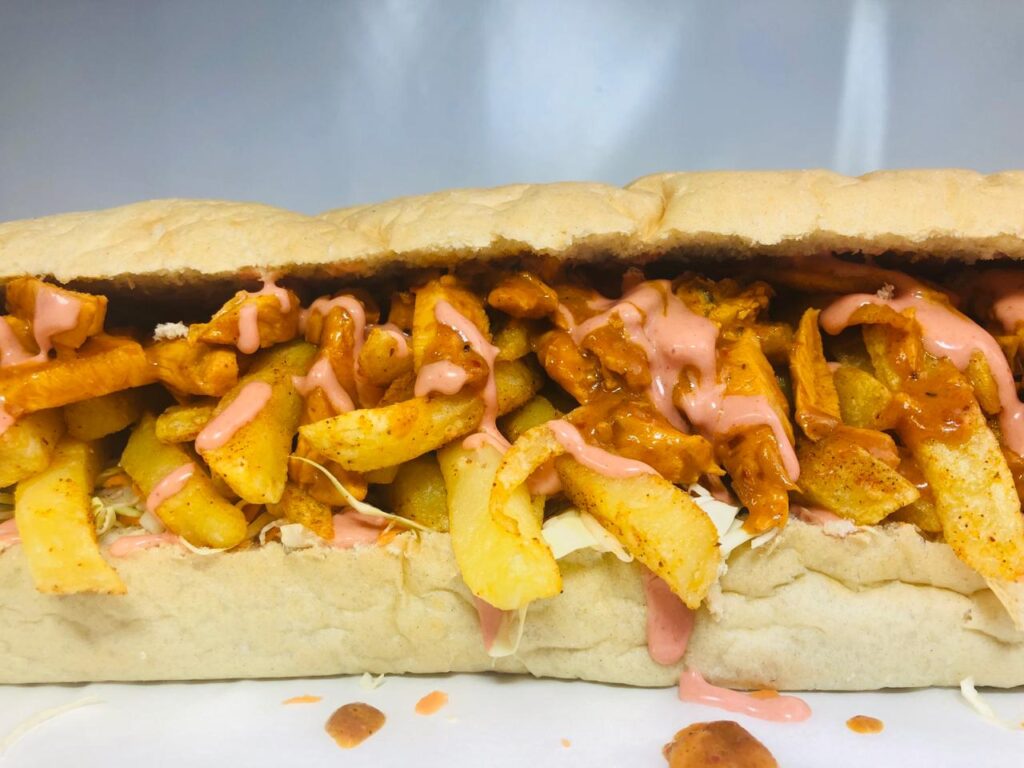
While home cooking is huge, takeaways are a major part of the lifestyle too. The gatsby, a legendary giant sandwich filled with hot chips and steak, is perhaps the most famous local takeaway, meant to be sliced up and shared among family or friends.
Sunday mornings in the Cape are often defined by the spicy, aromatic scent of koesisters—syrupy, coconut-dusted, spicy doughnuts that are a non-negotiable ritual for many families. Koesister mornings lead into the grand Sunday lunch, a most valued tradition. Families eat a “seven colour plate”, a meal that includes a range of different foods on one plate.

This lunch is often large enough to provide leftovers for that evening or the next day. Many homes therefore eat lightly on Monday evenings, often choosing something simple such as smoortjie or the remaining Sunday food.
Fridays are also a “no-cook” zone. Since the work week is ending, people prefer to light a braai or buy a gatsby. This also happens on payday. When people get their salaries, the stove stays off, and everyone heads to KFC or the local takeaway shop.
The calendar of the Cape is punctuated by specific dishes that hold deep religious and communal significance. On Easter, many households prepare pickled fish. This involves frying fish and then preserving it in a tangy curry sauce so it can be eaten cold with hot cross buns.
For Christmas lunch, a festive table is rarely considered complete without the “holy trinity” of cold meats: a sticky glazed gammon, a salt-cured soutvleis (corned beef), and a tender, thinly sliced beef tongue, usually served with salads.
Food Etiquette
In many households, people eat in the lounge or the bedroom, usually with the TV on, because their homes lack a dining room.
When everyone comes together for a big meal, the grown-ups and any visitors receive their food first, and only once the adults have their plates can the children get theirs.
Whoever dishes up at these big events will count the plates aloud. They call out every name to themselves to make sure nobody gets left behind or forgotten. If someone can’t finish their food or prefers to eat later, the host packs a parcel. This usually goes into an old plastic butter tub or a two-litre ice cream container. Mothers are very strict about their good Tupperware and refuse to let those containers leave the house because they never come back.
The plate is eaten in a particular order, too. Most people finish their vegetables and rice or potatoes first, leaving the meat for last.
While some families skip saying grace before they start, it is common for everyone to say a quick thank you for the food once they finish.
Afterwards, the children head to the kitchen to wash the dishes. Any leftovers or meat bones are saved in a plastic bag for the dogs.
Religion
In Cape Town, the spiritual life of the Coloured community is built on two primary pillars: Christianity and Islam. Most people identify as Christian, belonging to various Protestant denominations or the Catholic Church. At the same time, the Muslim community, referred to as Cape Malay, has a deep and historic presence that shapes the character of many neighbourhoods.
In areas like Bo-Kaap and parts of the Cape Flats, you will hear the Athaan, which is the call to prayer, echoing from local mosques several times a day. This sound is a central part of daily life. For many Muslim families, there is a strong sense of connection to the global Islamic community, and people closely follow news and events happening across the Middle East.

The month of Ramadaan is a central time for Muslim families. During this month, people fast from sunrise to sunset. It is a period of reflection and community, where neighbours often exchange plates of food before the evening meal. A specific tradition that takes place on the 15th night of Ramadaan is known as Boeber Night. On this evening, families prepare and serve boeber, which is a sweet, warm drink made with milk, vermicelli, sago, sugar, and spices like cardamom and sticks of cinnamon.
When the month of fasting ends, the community celebrates Labarang. This is the Cape Malay term for Eid al-Fitr. It is a day of big gatherings where people dress in new clothes and visit the homes of their relatives and friends. Food is a major part of the day.
Despite the different practices, there is a lot of respect between these two groups. It is quite common to find families where some members are Christian and others are Muslim.
Rites of Passage
Birthdays
First birthdays might be celebrated, though it’s really more for the adults than the little one. Some parents go all out with balloon arches, custom cakes, and a professional photographer capturing every moment. Others keep things simple with a table in the living room displaying the birthday cake surrounded by pastries, sweets, chips, and cooldrink, creating a backdrop for photos with the birthday child. Either way, the children who attend go home with party packets, a small thank-you for sharing in the celebration.
Turning twenty-one is a momentous occasion. Years ago, it was customary to hire the local community hall for an elaborate affair with beautiful decorations and proper catering. The guest of honour, dressed in their finest, would receive their 21st key during the celebration. The key is a symbol that they’ve reached adulthood and independence, that they can now unlock their own future. These days, many families prefer intimate, less formal gatherings at home, though the tradition of presenting the 21st key as a coming-of-age ritual continues.
The appreciation for life’s journey continues well into maturity, with milestone birthdays like 50, 60, and 70 being celebrated. For these birthdays, there is still a strong preference for the traditional “big” celebration. Returning to the community hall for these golden milestones allows the community to honour the wisdom and resilience of their elders. Just like at twenty-one, the person celebrating their birthday receives a ceremonial key.
Weddings
Christian weddings in the Cape Coloured community draw from Western customs, though they’ve evolved their own distinct character over time.
Some couples opt for grand affairs at beautiful venues—places like wine estates, for instance—where the ceremony happens outdoors, followed by a reception at the same location.
Others embrace the beloved community wedding, which has its own special charm and keeps the celebration close to home.

In earlier times, the bride-to-be was doused in eggs and flour during her kitchen tea, parading the streets with a carrot and potatoes between her thighs, walking door to door to beg for salt and sugar.
The community wedding has a particular choreography. The bride gets ready at home—dress, makeup, the full preparation—while the groom waits at their local church. When the time comes, the bride walks down the aisle accompanied by her father or a father figure who takes on this role. After exchanging vows, the celebration moves into the streets. A convoy of vehicles parades through the area, horns announcing the news to anyone within earshot. The couple sits in the lead car while family and friends follow behind.
The wedding party then heads to the beach or a city park for photographs. These sessions can take a while, but they’re considered essential – the backdrops are too good to miss.
Everyone reconvenes at the reception hall, where speeches are delivered, gifts are presented, and food is served. There’s an unspoken rule in Cape Coloured culture that Kenny G’s smooth jazz should play during the meal, and no proper wedding ends without the DJ dropping “Cha Cha Slide” to get everyone on the dance floor
At a Muslim wedding in Cape Town, the day usually begins with the nikah, which is the religious marriage contract, and this often takes place at a masjid or at the bride’s family home. Before the nikah, the mahr is agreed upon, which is the gift the groom gives to the bride, and the wali, usually her father or guardian, gives consent. An imam leads the nikah by reciting from the Qur’an and sharing a short naseehah about marriage in Islam. The ijab and qubul then take place, meaning the formal offer and acceptance, in the presence of witnesses. A du‘a is made for barakah, sabr, and a marriage grounded in deen, and at this point, the couple are officially married in the eyes of Islam.
After the nikah, the bride is taken to the bruidskamer, a private room where she waits with close female family members. This is a quiet, intimate part of the day where the bride is kept away from the main gathering, maintaining modesty and tradition. During this time, relatives and friends may come in to greet her, make du‘a, and offer mubarakah, while the groom remains with the men elsewhere.
Later in the day, Die Afhaal takes place, which is one of the most anticipated moments. This is when the groom and his family formally come to fetch the bride. There is often a respectful sense of ceremony, with light-hearted negotiation at the door, friendly exchanges, and plenty of smiles. Once the bride is brought out, she is handed over to the groom’s family, marking her transition from her parental home to her new life. Du‘as are made as she leaves, asking Allah for protection, ease, and happiness.
The walimah then follows, serving as the public acknowledgement of the marriage, where the wider community gathers. Men and women are often seated separately, and the atmosphere remains modest, warm, and family-centred. The day usually ends with sincere du‘as and well-wishes, leaving the couple supported by both faith and community as they begin their life together.
Funerals
Christian funerals are marathon events—physically, emotionally, and socially—that can consume an entire day and involve whole neighbourhoods. During the week before the service, the family’s house stays open to visitors. People stop by at all hours to offer sympathy. In the kitchen, the local aunties take charge. They manage the tea, coffee, and biscuits so the immediate family can grieve without the burden of hosting duties.
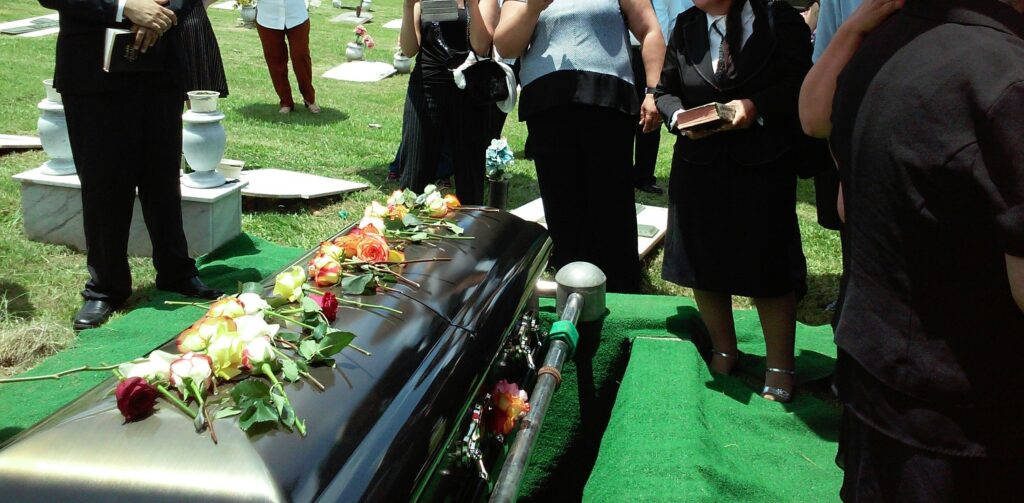
Saturday is the traditional funeral day because everyone needs to attend. Being asked to be a pallbearer is an honour reserved for family and close friends. On the morning of the funeral, the casket often returns to the lounge for a final viewing. This part of the day is intimate and emotional. Family members touch the deceased one last time, place flowers or cotton wool on their face. It’s raw but necessary for saying goodbye. Everyone in attendance receives a printed funeral programme with the order of service, names of pallbearers, and lyrics to the hymns. These are kept as mementoes by the community.
The church hosts the formal service led by a pastor or priest. Hymns, prayers, and scripture readings form the core of this service, with strong participation from the congregation.
For burials, the cemetery marks the final stage, known as the teraardebestelling.
At the graveside, after the minister’s final prayer, everyone takes a handful of soil and drops it onto the coffin. The men often stay behind afterwards, helping the gravediggers manually fill the grave whilst singing hymns together.
Once the burial concludes, the crowd moves to a local hall or back to the house for a meal. Cape Chicken Breyani is almost always on the menu, served alongside cakes and tea. While the lunch accommodates everyone who attended, a smaller group stays into the evening. This later gathering, known as “after-tears”, allows the mood to lighten through shared stories, helping the family transition out of the heaviness of the formal day.
In Cape Town, Islamic funerals, or Janaazahs, are community-driven events prioritised for completion within twenty-four hours of death. The process begins with Ghusl, a ritual washing performed by family or community members of the same gender. The body is then wrapped in a simple white shroud called a Kafan. Mourners gather at a local masjid or the home for the Janazah prayer, a standing supplication led by an Imam. Afterwards, a silent procession carries the deceased to the maqbara. The body is positioned facing Mecca, and attendees place three handfuls of soil into the grave to finalise the burial.
Other Occasions
The matric ball has become the defining event of a teenager’s final school year. Months of planning and saving lead up to this occasion. What happens before the ball gets as much attention as the event itself. On the day itself, the celebration typically begins at home with an intimate gathering. Family and friends arrive to share in the joy, enjoying finger foods while waiting for that magical moment when the matriculant makes their grand appearance in their carefully chosen attire. The home is often transformed for the occasion, with elaborate displays featuring balloon arches and other decorations that create the perfect backdrop for countless photographs. When the hired car pulls up, neighbours pour out of their houses. The street transforms into an impromptu audience, applauding and cheering as the young person departs. Some family members follow the matriculant to the venue, where community members line up to watch matriculants walk the red carpet. Interestingly, fewer matriculants now bring dates compared to earlier generations. Many arrive alone, comfortable being the centre of their own celebration.
Baptism marks a child’s welcome into the church. Babies are dressed in white, and the priest or minister blesses them with water, while family and friends gather to witness and celebrate. Confirmation is a step into spiritual maturity, typically for teenagers, who attend classes to understand their faith and then publicly affirm their beliefs during a church service. First communion celebrates a child taking the Eucharist for the first time, often wearing special clothing and participating in a service with family and friends, marking a meaningful step in their spiritual journey.
The Kaapse Klopse / Cape Minstrel Carnival
The Kaapse Klopse, also known as the Cape Town Minstrel Carnival, is a massive street festival that takes place every year in Cape Town, South Africa. While the main event usually happens on 2nd January, a day known as Tweede Nuwe Jaar (Second New Year), the celebrations actually stretch across several Saturdays in the early part of the year.
The history of the carnival is linked to the era of slavery in the Cape. During the 1800s, enslaved people were given a day off on the 2nd January because they had to work while their masters celebrated on New Year’s Day. They used this day to celebrate their own culture, dressing up and playing music as they moved through the streets.
Over time, this grew into a formal tradition influenced by many cultures, including visiting American minstrel shows in the late 1800s, which is where the colourful face paint and specific musical styles originated.
Today, the most famous part of the festival is the grand march through the city centre. Thousands of performers, organised into troupes or “Klopse,” walk from District Six toward the Bo-Kaap. They wear bright, shiny suits made of satin or sequins and carry matching umbrellas. The music is led by brass bands and “ghoema” drums, which have a very specific beat unique to the Cape. Two of the most famous songs associated with the festival are “January, February, March” and “Daar Kom Die Alibama”. While many people think it refers to an Arabian theme, it actually refers to the CSS Alabama, a ship that visited Cape Town in 1863.
Preparation for the carnival happens in places called Klopse Kamers. These are community hubs or clubhouses where troupes meet months in advance. Inside these rooms, tailors sew the bright, shiny uniforms, and musicians practice their instruments. The troupes also practise their unique “ghoema” beat. People in the community gather at the Kamers to help with costumes or just to watch the rehearsals.
Beyond the street parade, the groups enter a series of competitions held at stadiums. These troupes are judged on several categories, including their singing, their choreography, and how well their brass bands play. They also compete in “Grand March Past” events where the focus is on their synchronised walking and outfits.
The Local Economy
The economy on the Cape Flats is a mix of small-scale entrepreneurship and established retail chains.
In many neighbourhoods, you will find independent spaza shops (known as babbies), local takeaway outlets, liquor stores, barber shops, and petrol stations serving the immediate community. At the same time, larger corporate names like Shoprite and fast-food franchises like KFC often operate nearby.
Beyond these shopfronts, many residents run side hustles to supplement their income. These home-based businesses include selling takeaways, various goods, or offering services like hairstyling. This local trade may involve customers buying items oppie boek (on credit) and settling their debt with interest once they receive their month-end pay.
The streets are also filled with mobile commerce. Fruit stalls are positioned at busy corners, while hawker bakkies loaded with fresh produce drive through the residential blocks. Sellers often hop off these vehicles to walk from door to door, bringing fruit and vegetables directly to people’s homes. This combination of formal shopping centres and informal street trade creates a layered and active local marketplace.
Living Conditions
Following the forced removals of the apartheid era, many families had to rebuild their lives from scratch on the sandy terrain of the Cape Flats. Today, the living conditions are a mix of resilience and ongoing hardship.
Residents are hard-working people who make an honest living, often commuting long distances to reach jobs in the city centre or industrial hubs. However, unemployment remains a significant challenge for some, and poverty affects many households. Because of these economic pressures, a large number of families rely on SASSA grants to cover their basic needs like food and electricity.
The types of homes you find here vary quite a bit. Many people live in formal brick houses or maisonettes, which are attached, two-storey homes. There are also many infill projects, often referred to as government flats, which provide high-density housing for thousands of residents. Space is at a premium, leading to the common practice of “backyard dwellings”. In these cases, families build small shacks behind a main house because they cannot find or afford their own formal property.

Social issues like crime and substance abuse exist, as they are often the long-term consequences of being displaced from original neighbourhoods decades ago. Even though people are now free to live wherever they can afford, the legacy of the past is not something that disappears quickly.
Leisure and Recreation
The drinking culture is a big part of social life, especially on weekends. It often happens around a braai at home, with loud music filling the yard and neighbours knowing something is going on. These gatherings bring people together after long weeks of work. When money runs tight, no one is excluded. Those coming together chip in (known as “klap for a dop”), where everyone contributes what they can. Tastes range widely. There is a love for premium spirits, but Black Label beer, Fourth Street wine and ciders remain firm favourites. For some, the night only settles once the okka pipe is out and smokkie has closed.
A game of dominoes holds strong social value. We bring out the dums during a backyard party or on a quiet Sunday afternoon under a tree on the sidewalk. Some players are masters of strategy, thinking several moves ahead, while others “las,” which means they play by ear.
During holiday seasons, there is a strong tradition of “camping”. However, this practice is distinct from the rugged wilderness experience. Instead of pitching tents in isolated forests, the preferred style of camping involves booking into local holiday resorts or caravan parks. Families secure chalets, providing a comfortable home base that allows for large, multi-generational groups to gather. These resorts offer a communal environment where children can roam safely, and adults can socialise in a shared outdoor setting, maintaining the comforts of home while enjoying a change of scenery.
Sport is a major passion, particularly football and rugby. Fans closely follow the English Premier League, supporting clubs such as Manchester United, Liverpool, and Manchester City. Match days see people gathering at home or in local pubs to watch the action. This love for sport starts young; children often play in the streets or on local community fields, and residents show great support for neighbourhood sports events.
Summer days are synonymous with the water. Families flock to the beach or community swimming pools to cool down. Boxing Day and New Year’s Day are the most popular times for these outings, with families packing food, drinks, and shade, planning to spend hours together.
Public events also draw massive crowds. Occasions like the Mitchells Plain Festival, Easy Sundays Picnic, the Cape Town Carnival, and the Festive Lights Switch-On are dates many look forward to all year.
Karaoke nights provide another popular outlet for relaxation. Local pubs draw crowds on Thursdays and Sundays, but fundraising karaoke events hold a special place in the heart of the neighbourhood. When a school or church organises these nights at a community hall, people attend to support the cause, bringing their own food and drink for an evening of singing and socialising.
Home Entertainment
For movie night, American blockbusters are preferred over South African films. Even so, local movies set on the Cape Flats, such as Four Corners, Ellen Pakkies, and Noem My Skollie, are very important. These films show life experiences that many people recognise from their own lives, which helped these movies gain a cult following.
Television habits follow a similar pattern. International shows are popular, yet local soapies like Suidooster and Kelders van Geheime have massive, loyal audiences. We also enjoy Turkish soapies translated into Afrikaans. These stories keep us hooked every single night.
Our music tastes cover a lot of ground. The 90s and 2000s shaped a generation raised on Western R&B, hip hop, and soul. The older crowd still loves those classics, but the youth today typically gravitate towards American and Afrikaaps hip hop, gqom, and amapiano.
Friday nights and Saturdays are reserved for DJ mixes from the likes of DJ Ice Flake and DJ Masoodah, with Afrikaaps hip-hop, gqom, and amapiano keeping the weekend lively.
Sundays require a different atmosphere. Slow jams and gospel play in the background during food preparation or during a quiet afternoon wind-down. When the holiday season comes around, the mood grows festive and loud, and we dance to the tune of whatever song is trending. But there is always time for a little Judy Boucher.
Education
Families value education because it represents hope. Opportunity. An escape from hardship.
Parents make enormous sacrifices so their children can sit in classrooms and dream bigger.
That dream fuels extraordinary determination. Students wake at dawn to catch multiple taxis to better schools or walk to school through gang-ridden streets. They study by candlelight during load-shedding or write exams on an empty stomach. These sacrifices bear fruit when a son becomes the first in his family to earn a degree or when a daughter graduates as a teacher or engineer.
Still, dropouts remain devastatingly common. Poverty, violence, pregnancy, and overwhelmed school systems claim too many bright minds. Despite this, parents, community leaders and teachers fight relentlessly for the educational opportunities every child deserves.
Employment in the Coloured Community
Apartheid’s employment policies were designed to keep Coloured communities in economic subordination. Systematic exclusion from quality education and skilled professions pushed generations into fishing, domestic service, and manual trades. Residential segregation meant workers had to spend hours travelling to underpaid work. Today, low-wage labour continues to employ significant numbers, and unemployment affects even those with qualifications.
But we’ve also seen generations breaking through career glass ceilings. Representation is growing in the fields of law, medicine, business, academia, sports, arts, and politics. Some have climbed corporate ladders; others have built companies from scratch. Social media has given these success stories greater visibility, allowing communities to acknowledge and take pride in individuals who’ve navigated past systemic obstacles.
Appearance
Passion Gap
The passion gap is a distinctive cultural practice in Cape Coloured communities where people have their front teeth removed. For those who have a gap, it is quite common to own a set of dentures, which they wear for work or formal events. You’ll often see a denture enhanced with a solid gold tooth or a “gold slit”—a thin vertical line of gold set into the porcelain.
Understanding why this practice existed requires looking at it from multiple angles. One of the most commonly cited reasons is aesthetic preference. Within certain social circles, the gap was genuinely considered attractive and desirable. It became a beauty standard in its own right, something that made young people feel they fit in with their peers and were seen as appealing. This is important to understand because it counters the assumption that the practice was purely negative or harmful. For many people who participated in it, this was a conscious choice about how they wanted to present themselves.
There are also theories about the practice having historical connections to older traditions, possibly linking back to various African customs where tooth modification held cultural significance. However, the exact origins are difficult to trace with certainty, and multiple influences likely converged over time to create this particular practice in the Cape.
What’s particularly striking is how normalised it became within certain communities. Parents sometimes took their children to have teeth removed, viewing it as a rite of passage or simply as something that was done. It wasn’t hidden or shameful within those contexts; it was part of the social fabric. Some accounts suggest practical reasons were also given, such as making it easier to whistle or speak in certain ways, though these explanations seem to have been secondary to the social and aesthetic motivations.
The practice has become much less common in recent generations, as attitudes have shifted and awareness of dental health has increased. Many people who had teeth removed in their youth later came to regret the decision, particularly as they got older and experienced dental complications or felt self-conscious in different social contexts. The gap that seemed desirable in adolescence sometimes became a source of embarrassment or difficulty later in life.
Today, there’s more open discussion about the practice, with dental professionals and community health workers actively discouraging it.
Hair
Under the Apartheid-era Population Registration Act of 1950, hair was used as a literal tool for racial sorting. The infamous pencil test involved sticking a pencil into a person’s hair; if it stayed put because of the curl or texture, the person was often classified as “Black”; if it fell out, they could be classified as “Coloured” or even “White”. This created a traumatic association where “straight” hair became synonymous with upward mobility, safety, and privilege, while “kroes” (frizzy/coily) hair was stigmatised as a marker of being “lesser”.
In the Western Cape, the vocabulary used to describe hair is telling. “styl hare” (smooth hair) is generally viewed as the “ideal”, suggesting a lineage closer to European or Asian ancestry. Conversely, “kroes hare” (frizzy hair) has historically been used derogatorily, carrying the weight of “otherness”. You’ll also hear the term “bossiekop” for a messy or natural afro-style head of hair, used with varying degrees of affection or insult depending on the context.
The swirlkous is a makeshift cap, often fashioned from the leg of a discarded pair of stockings. The practice of “swirling” involves wrapping damp, often chemically straightened or heat-pressed hair tightly around the head and securing it with the stocking cap overnight.
For decades, the standard of beauty in the community was—and for many, remains—bone-straight hair. Chemical relaxers became a rite of passage for young girls, often starting as early as primary school. The weekly “wash and blow” remains a cultural staple to keep “naatjies” (new growth or curls at the roots) at bay.
Choosing to wear hair naturally is often a political statement—a rejection of the idea that one needs to look “less Black” to be beautiful or professional. This shift hasn’t been without conflict; we’ve seen high-profile protests at South African schools where students fought against discriminatory hair policies that labelled natural styles as untidy.
Cosmetics
Henna is a traditional beautification practice, particularly among Muslim families.
It involves applying henna paste to fingernails and toenails, leaving a rich reddish-brown stain that can last weeks. It’s especially popular during Eid celebrations, weddings, and special occasions, symbolising beauty, festivity, and cultural identity. Unlike temporary nail polish, henna creates a natural, long-lasting colour that’s considered modest and elegant.
Relationships
You often find three generations under one roof or grown children building a place in the back of their parents’ yard. Even when children move out, they often stay within the same neighbourhood or street to remain “om die draai” (around the corner).
Elders get the most respect. Children are raised to listen and never talk back. There is a strict rule against “tande tel,” which means youngsters cannot hang around when adults are discussing grown-up business. If a child tries to listen in, they get sent away immediately.
Discipline is firm, and everyone has a childhood story involving a “sloffie” or a wooden spoon to keep them in line. Respect for seniors is a rule that nobody breaks.
The grandmother, known as “Ma,” holds the family together. Her house is where everyone gathers for big meals and special occasions. People believe that once she passes away, the family ties start to loosen and relatives drift apart. Grandfathers are called “Pa,” while biological parents go by mommy and daddy. You will also hear aunts addressed as “nana” or “tietie.”
Historically, men were the breadwinners and women the nurturers. Today, while thousands of women hold their careers, they are often still expected to manage the “emotional labour” and household traditions.
Children are usually expected to support their parents emotionally and financially as they grow older, and parents often make big sacrifices for their children’s education and future.
That doesn’t mean families are free of conflict. Long-standing grudges, generational trauma, and unspoken issues are common, especially given histories of displacement, poverty, and systemic pressure.
Childhood Games
Growing up in the 90s or 2000s meant your afternoons belonged to the street. The moment school finished, you’d dump your bag inside and head straight out to find whoever was around. The games we played had been passed down through generations, each one with its own unwritten rules that somehow every kid just knew.
Kids played wegkruipertjie, cowboys and crooks, kennetjie, drie blikkies, skaloeloe, aan-aan, vroteier, blinde-molletjie, wolf-wolf, hokkie, skiptou, toktokkie, huisie huisie, marbles, and tol. You played until the streetlights flickered on or until you heard your mother’s voice cutting through the evening air, calling you home.
What does Cape Coloured culture actually mean to those who live it? VOC News caught up with Capetonians on the ground to get their take. This is what some had to say:
“Coloured culture is walking in slippers and socks on the beach.”
“Eating chicken on a Sunday.”
“Seeing the sun out and immediately needing to do washing.”
“One drop of rain can fall, and I’m making a pot of soup.”
“Koesisters and tea on a Sunday morning.”
“If I know I have plans on the weekend, the Fade (haircut) has to be in.”
“Getting a hiding with a wooden spoon or a sloffie (slipper).”
“Getting together with your family, good food, good music, and all-around good vibes.”
“It’s the klopse; it’s definitely the coons.”